Having been in Spain for quite some time, every time I pass by a ham shop I get really tempted, and I finally couldn’t resist buying a whole ham! Seeing this shiny, large piece resting in my home, I felt both excited and a bit overwhelmed. I believe many friends share the same dilemma—wanting to buy but worried about handling it themselves. Today, I’ll share my novice-level full process of “opening the ham” from scratch, hoping to provide some useful guidance for those interested.
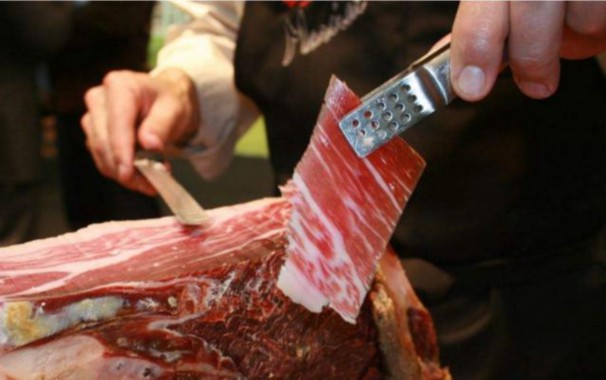
The first and most important step: “To do a good job, one must first sharpen one’s tools.” Don’t think you can just manage with any kitchen knife. A proper set of tools is essential, at least including a stable ham holder and a long, slender ham knife. The ham holder must be heavy and have a large base; otherwise, the ham will wobble while slicing, making it difficult and potentially dangerous. I bought the most basic model for about 30 euros, and it has served me well.
Once preparations are complete, you can start this ceremonial step! I started slicing with the hoof facing upward, where the meat is the most tender and easiest to cut, known as the Maza part.
- Cleaning: First, use a short, wide blade to slice off the yellow, slightly rancid outer layer of fat on the ham’s surface. Be careful not to cut too much—just enough to expose the pink meat underneath. Don’t throw away this extracted fat; it will be useful later.
- Opening the Cut: About two fingers below the ankle, make a deep V-shaped cut with a short knife to sever the fascia. This allows the meat slices to separate easily later on.
- Slicing the Meat: Switch to the long ham knife, keep the blade horizontal, and gently use a “pulling saw” motion,
instead of chopping down, to slice the ham thinly and evenly. The goal is slices as thin as cicada wings that are translucent!
Slicing ham is definitely an art, and different parts vary in texture and slicing technique. I have compiled a simple table about buying whole Spanish hams to help everyone understand better.
| Part Name | Spanish Term | Characteristics | Slicing Suggestions |
|---|
| Main Part | Maza | Rich in fat, tender and juicy | Largest area, easiest to slice, good for beginners |
| Opposite Side | Babilla/Contramaza | Less fat, firmer meat | Smaller area, Spanish 5J whole ham version is leaner and more flavorful |
| Shank | Jarrete/Codillo | Strong texture, chewy | Usually cut into small pieces or cubes, excellent for stews and stir-fries |
Finally, let’s talk about the preservation question everyone’s curious about. With such a large ham, you obviously can’t finish it all at once. The correct method is to use the clean white fat you just trimmed (without any off smells) to cover the exposed cut surface like a lid, sealing fat with fat. Then, cover the entire ham with cling film or a clean cotton cloth and store it in a cool, ventilated place—never refrigerate it! Doing this, the ham can last for one or two months without issues. Before each serving, discard the thin outer layer, and the inside will remain fresh.
Have you ever bought a whole ham? If you have any unique tips or pitfalls, feel free to share and discuss!
