When I first arrived in Spain, I often heard people talk about Iberian ham and Serrano ham, but later I realized there’s much more to it. Besides the Spanish cured ham pigs’ breed and feed, there’s a particularly crucial but easily overlooked factor—the curing altitude! This factor directly determines the flavor layers of the ham you taste.
Simply put, the quality of ham is closely related to where it is “aged.” Spain’s top ham producing regions, such as Guijuelo in Salamanca and Teruel, are without exception high-altitude areas. The unique climate conditions brought by altitude serve as a natural “magician” that perfects the ham.
Why is Altitude So Important?
High-altitude regions usually mean lower average annual temperatures and more stable humidity. Under such conditions, ham can undergo a long and slow dehydration and maturation process. Low temperatures delay fat oxidation, allowing flavor compounds to accumulate and transform fully, ultimately forming that complex, delicate, melt-in-your-mouth texture. Conversely, low-altitude areas tend to have higher temperatures, causing the curing process to be too rapid, resulting in overly salty or one-dimensional flavors. Therefore, Spanish cured ham eating being expensive does not necessarily mean better quality, but those from high altitudes are usually reliable.
I have compiled a simple table to give you a clear overview of several famous regions and their altitude characteristics:
| Region | Type | Minimum Curing Altitude | Flavor Profile |
|---|
| Guijuelo | Ibérico | Over 1000 meters | Slightly sweet taste, delicate fat, mild aroma |
| Dehesa de Extremadura | Ibérico | Lower altitude | Robust taste, direct flavor, chewier texture |
| Teruel | Serrano | Over 800 meters | The only Serrano with D.O.P, moderate saltiness |
| Jabugo | Ibérico | 600-900 meters | Most intense aroma, prominent nutty flavor |
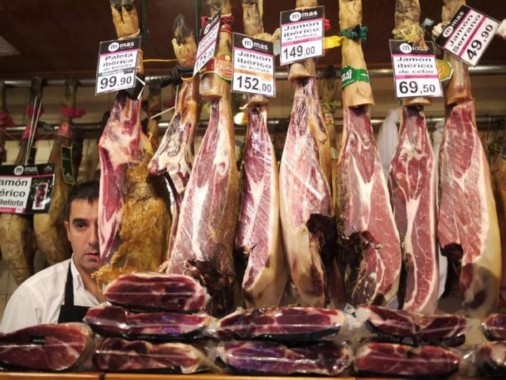
So next time you visit a supermarket or ham shop, besides looking at the brand and age, pay attention to its region of origin. If you want to try ham that is more delicate, sweet, and less Spanish cured ham production process salty, focus on products from high-altitude regions. For example, Serrano ham from Teruel is definitely a cost-effective king, with quality that rivals many regular Iberian hams. Which region’s ham do you usually prefer? Feel free to leave your comments below!
