If you’ve just arrived in Spain, do you feel as overwhelmed as I was when I first stood in front of the ham section in a supermarket? Rows of long legs hanging there, prices ranging from dozens to over a thousand euros, and packaging cluttered with words you don’t understand, feeling like every single one looks almost the same. How exactly do you choose? Today, as someone with experience, I’ll clarify the essentials of Spanish ham for you, so after reading you’ll be ready to dive in!
Distinguish the Two Main Types: Serrano vs Ibérico
You need to know that Spanish ham is divided into two basic categories. The more commonly seen, affordable type in domestic supermarkets is Jamón Serrano, made from ordinary white pig legs with a shorter curing process, resulting in a saltier and firmer texture. The real legend of Spanish ham, however, is Jamón Ibérico, which must come from the unique Iberian black-hoofed pig native to Spain. It has a limited supply, a high price, rich marbling, melts in your mouth, and offers complex flavors. So, if you want the most authentic experience, just look for the word Ibérico!
Understanding the “ID card” of Iberian ham: the four color labels
To regulate the market, the Spanish government assigns four color labels that hang directly on the pig’s hoof—this is the most straightforward way to distinguish authentic Spanish ham flavors. When buying, just pay attention to the color and you won’t go wrong! I have compiled a authentic Spanish ham introduction table below for easy understanding:
| Label Color | Pig Purity & Feeding Method | General Grade |
|---|
| Black | 100% Iberian black pig, pure acorn-fed | Top of the top |
| Red | 50%/75% Iberian black pig, pure acorn-fed | Excellent |
| Green | Iberian black pig, mixed grain and acorn-fed | Good |
| White | Iberian black pig, pure grain-fed | Entry-level |
Simply put, the black label represents the highest grade “100% acorn-fed Iberian ham,” which we commonly call Pata Negra, the ultimate luxury. The red label also indicates very high quality. Green and white labels are comparatively more modest but are sufficient for enjoying authentic Spanish ham snacks in everyday tasting.
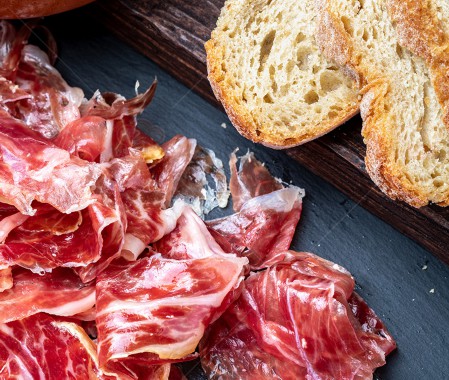
Production Areas and Eating Tips
Spain’s four legally designated Iberian ham production areas are renowned: Guijuelo, Jabugo, Dehesa de Extremadura, and Los Pedroches. Each region has its distinct flavor profile—for example, Jabugo hams are richer and more intense, while Guijuelo tends to be sweeter and smoother. The famous “5J” brand in Spain originates from the Jabugo area.
A final piece of advice: if you’re just trying it out, go for hand-sliced vacuum-packed pieces available in supermarkets or specialty stores for convenience. The best Iberian ham is perfect eaten as is, possibly with a slice of bread or a small glass of red wine. Avoid heating or cooking it at all costs—that would be a sacrilege! I hope this guide helps you, and I welcome fellow ham enthusiasts to share their experiences and recommend hidden gem hams in the comments.
