Recently, craving ham but not wanting to spend a lot on the Black Label, I got myself a Red Label Front Leg. After unboxing, I found it incredibly delicious and wanted to share this ham with everyone. It feels like the perfect entry-level and everyday staple! Many experts on forums often discuss Black and Green Labels, but actually, the Red Label is the everyday choice for many Spanish families and offers excellent value for money.
What Exactly Is Red Label Front Leg?
Simply put, Spanish Iberian ham is graded by the pig’s bloodline purity and feeding method, distinguished by different colored labels—commonly black, red, green, and white. Today we talk about the Red Label, officially called Jamón Ibérico de Cebo de Campo. This means the pig is 75% or 50% Iberian black pig and semi-free-range on open fields. They feed on natural pasture and wild fruits, supplemented with grain feed. This diet gives it a flavor that reflects both acorn notes and the richness of grain feeding—very unique.
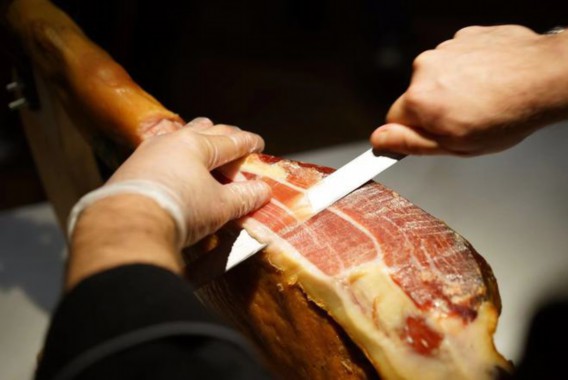
Front Leg vs Hind Leg
If you’re new to ham, these can be confusing. The one I bought is Paleta, not the commonly known Jamón. I summarized their main differences in a simple table for clarity:
| Feature | Front Leg | Hind Leg |
|---|
| Weight | Usually 4-6 kg | Usually 7-9 kg |
| Price | Relatively cheaper | Relatively expensive |
| Flavor | Richer fat, more direct taste | More complex texture, subtler flavor |
| Curing Time | Shorter | Longer |
| Slicing Difficulty | More bones, slightly harder | Relatively easier |
For Spanish Red Label Ham Recommendations families, if consumption speed is moderate, buying a front leg involves less pressure. Contrary to the assumption that the hind leg is always better, they are just different parts with distinct flavors—choosing what suits you best is what matters.
Personally, I find the Red Label Front Leg’s taste to be very balanced. Its fattiness is just right, unlike the White Label ham which feels a bit dry as explained in Red Label Iberian Ham Eating Guide, nor as intense with acorn flavor as the Black Label or Green Label detailed in Red & Green Label Spanish Ham. The melt-in-your-mouth fat carries a subtle nutty aroma, with moderate saltiness. Whether eaten plain or paired with a glass of Rioja red wine, it’s simply amazing. Slicing a few pieces into a toasted baguette to make a Bocadillo equals a perfect quick lunch. What types of ham do you usually enjoy? Feel free to share your experience below!
