When I first arrived in Spain, I was probably as shocked as everyone else by the countless hams everywhere. Hanging above every bar counter were several shiny, large legs of ham; in supermarkets, there are even special ham counters where professionals slice the ham on-site, filling the air with an irresistible aroma. People often praise Spanish ham as the best in the world, but what exactly makes it so good? Is it really worth the price? Today, I want to dive deeper and have a chat about how to best eat Spanish ham.
The Two Main Categories of Spanish Ham
First, it’s important to distinguish the two main types of Spanish ham: Iberian ham and Serrano ham. Simply put, the difference lies in the kind of pig.
- Jamón Ibérico: This ham is made from Spain’s unique black hoof pigs, which are rare and expensive. These pigs can be raised free-range in oak groves, feeding on acorns. That’s why the best Spanish ham prices come with a distinctive nutty aroma and marbling like snowflakes, melting in your mouth.
- Jamón Serrano: This ham comes from ordinary white pigs, with larger production and more affordable prices. It’s the staple on everyday Spanish tables, with a saltier flavor and a firmer texture.
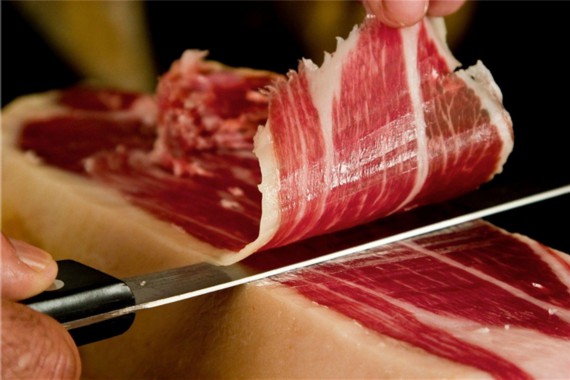
Grades of Iberian Ham
If you want to buy Ibérico ham, you must learn to recognize its “ID card”—different colored labels on the leg. This directly determines its quality and price!
| Label Color | Pig’s Bloodline Purity | Feeding Method | Common Name |
|---|
| Black | 100% Iberian black pig | Pure acorn feeding | Pure acorn |
| Red | 50% or 75% Iberian black pig | Acorn feeding | Acorn |
| Green | More than 50% Iberian black pig | Mixed feed + pasture | Pasture |
| White | More than 50% Iberian black pig | Grain feeding | Grain-fed |
Therefore, which Spanish ham grade is best, you get what you pay for—the black label is the highest grade!
Taste is very subjective. Some think the fat aroma of Iberian ham is unmatched; others prefer the sweeter flavor of Italian Parma ham, and even Chinese hams like Jinhua or Xuanwei have their unique charms. A common misconception is that all Spanish ham is very salty; however, top-grade Ibérico ham has very complex flavors and relatively lower saltiness.
After so much said, what do you think? Are you an Ibérico supporter or a Serrano fan? Or maybe you have a better ham recommendation? Feel free to join the discussion downstairs to share your “ham stories”!
