When I first arrived in Spain, every time I went to supermarkets like Mercadona or Carrefour, I was amazed by the entire rows filled with hanging hams, with prices ranging from tens to hundreds of euros, dazzling anyone. I believe many of you were just like me, unable to tell the difference at first and just buying randomly. Today, speaking as someone experienced, I want to talk about Spain’s soul food—cured ham Jamón—and hopefully help newcomers.
The Two Big Families of Jamón: Serrano vs. Ibérico
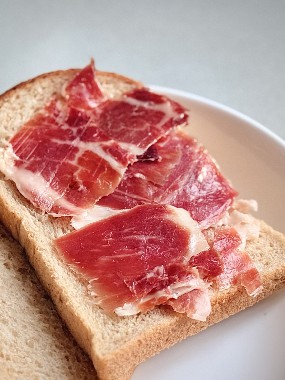
Simply put, Spanish ham mainly divides into two categories. Understand these two and you’re on your way. The first category is Serrano ham, which is the most common and affordable ham seen in Spanish ham culinary pairings, made from regular white pigs, budget-friendly, perfect for everyday meals and sandwiches. The second is the renowned Iberian ham, made from Spain’s unique black-hoofed pigs, rare in production, richly marbled with fat, offering a complex taste. It is considered the premium ham in Spanish ham food recommendations, naturally priced much higher.
How to Identify the Grades of Iberian Ham?
Iberian ham itself is also graded based on the pig’s bloodline purity and feeding method. Currently, official labels use different colors, making it easy to identify and avoid being misled!
| Color Label | Name | Pig Breed and Feeding Method |
|---|
| Black | de Bellota 100% Ibérico | 100% pure Iberian black pig, fully free-range in oak forests, eating only acorns and natural foods. |
| Red | de Bellota Ibérico | 50% or 75% Iberian bloodline, also free-range in oak forests. |
| Green | de Cebo de Campo Ibérico | Over 50% Iberian bloodline, free-range in fields, fed on grains and natural foods. |
| White | de Cebo Ibérico | Over 50% Iberian bloodline, raised in farms, only fed grain feed. |
The rank and flavor are: Black > Red > Green > White. The black label is the top-tier “acorn ham,” melting in your mouth with a buttery texture and nutty aroma—once tried, unforgettable for life!
Finally, some practical advice: high-quality Iberian ham is best sliced fresh and eaten immediately, ideally at room temperature for the best flavor. Never eat it straight from the fridge, as the fat will harden and the aroma won’t develop. It pairs wonderfully with a glass of red wine, a slice of melon, or some Picos breadsticks. The Spanish ham street food experience is truly a delight. What kind of ham do you usually buy? Do you have any secret recipes or favorite ham shops to recommend? Feel free to leave your thoughts below!
