You just got a much-anticipated Jamón Ibérico, and after a few days you notice a layer of white mold, even some green spots? Your heart sinks—could such an expensive ham be ruined? Don’t be quick to discard it! As an experienced connoisseur who has enjoyed Spanish ham mold in Spain for many years, today I’ll talk about this phenomenon of ham “molding.”
Why Does Spanish Ham “Mold”?
First, it’s important to clarify that: it is completely normal for Spanish ham to develop mold during the curing process and is actually a necessary step! Spanish ham, especially high-quality Jamón Ibérico, undergoes a very long curing period. During this extensive air-drying and aging phase, natural microbial colonies develop on the surface. These microbes, particularly certain Penicillium species, are not harmful; instead, they act like a natural protective layer that prevents invasion by harmful bacteria and participate in flavor development, contributing to the ham’s unique and rich aroma. So, seeing white, powdery mold is a good sign—it means your ham is aging in a traditional and natural way.
How to Distinguish “Good Mold” from “Bad Mold”?
Not all mold is friendly. Learning to differentiate them is crucial. You can judge based on color, smell, and appearance. I’ve prepared a simple table from Spanish ham fully molded for easy reference:
| Mold Type | Color and Appearance | Handling Suggestions |
|---|
| Beneficial Mold | White, gray-green, bluish-green, usually powdery or short furry, evenly distributed. | Normal phenomenon and source of flavor. Wipe clean with oil and it is safe to eat. |
| Concerning Mold | Black, yellow, dark green, possibly spotty and slightly sticky. | Colonies may have penetrated the ham mold deeply. Cut off the moldy area and at least 1 cm of surrounding tissue; consume with caution. |
| Spoilage Mold | Bright colors or strong ammonia or putrid odors. | No hope, throw it away! The whole ham is spoiled and absolutely unsafe to eat! |
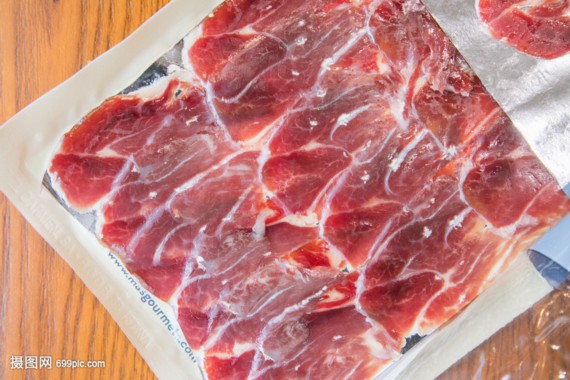
The correct treatment is quite simple. For beneficial molds, just use a clean cloth or kitchen paper dipped lightly in extra virgin olive oil to gently and evenly wipe the ham surface to remove the mold. The oil not only cleans but also forms a protective layer on the ham surface, slowing moisture loss and oxidation. Remember, this method only applies to the intact outer skin of the ham.
Finally, let’s talk about storage. A whole unopened ham is best hung by its rope in a cool, dry, and ventilated place, avoiding direct sunlight and high temperatures. Once cut, it’s more involved. After each slicing, always cover the cut surface with the first slice of fat-covered rind! This acts as a natural “cling film,” effectively preventing oxidation, drying out, and contamination of the cut area. Then wrap with cling film or a clean cotton cloth. Never store the entire ham in the fridge, as cold and moisture damage its flavor and texture. I hope this knowledge helps everyone. Enjoy your ham!
