Hello to all food lovers in the forum! After spending quite some time in Spain, my favorite thing has been the savory and oily taste of Jamón. Every time I order it in a restaurant or buy it at the supermarket, I always wonder, how is such a delicious product actually made? How does it differ from Chinese hams like Jinhua ham or Xuanwei ham? After some research, today I want to share with you the seemingly simple but actually intricate fermentation process of Spanish ham!
It all starts with a fresh pork hind leg and a large amount of sea salt. This step, called Salazón, is explained in detail in the Spanish ham decomposition process. Workers completely cover the entire ham with salt, like wrapping it in a thick “salt blanket.” The salt’s role is not only seasoning but, more importantly, using osmotic pressure to dehydrate the meat and inhibit harmful microbial growth. This is the first natural preservation step. Depending on the ham’s weight, this process lasts about one to two weeks, allowing the salt to fully penetrate.
After salting, the ham gets a “bath” to wash off the excess surface salt. However, the salt is mostly on the surface at this stage, so the ham needs a “resting period.” It is hung in a low-temperature, high-humidity room so that over more than a month, the salt slowly and evenly penetrates deeply into the muscle tissues. This step is crucial in determining the final saltiness of the ham; it’s not something done overnight.
Crucial Steps in Ham Fermentation
Next comes a long “refinement” phase – drying and maturing. The ham is moved to a drying room called the Secadero. Take a look at this picture; isn’t it spectacular?
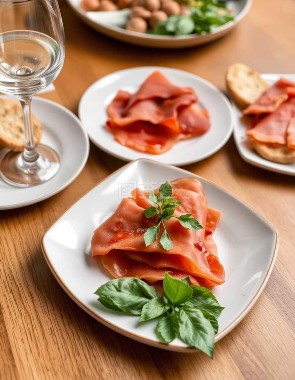
During this stage, people control the opening and closing of ventilation windows as described in the process of opening Spanish ham, cleverly using natural fluctuations in temperature and humidity to gradually dehydrate and dry the ham. The fat in the leg slowly melts and seeps into the muscle fibers, creating beautiful marbling—the source of the ham’s sweet and oily texture. This entire phase takes at least six months.
The final step is the climax: aging in a wine cellar. The ham is transferred to an underground or semi-underground cellar with lower temperature and humidity to undergo final maturation. Here, a series of complex biochemical reactions occur inside the ham, breaking down proteins and fats into various amino acids and aromatic compounds, resulting in the unique, rich, and long-lasting taste we enjoy. One might say, time is the best seasoning.
I have prepared a simple table to help you understand the entire process:
| Stage | Main Purpose | Environmental Characteristics |
|---|
| Salting | Dehydration, preservation | Low temperature, high humidity |
| Drying and Maturation | Gradual drying, fat penetration | Temperature and humidity vary naturally with the seasons |
| Wine Cellar Aging | Flavor development, aroma maturation | Constant low temperature, specific humidity |
A top-quality Iberian ham, from pig rearing to the final product, might take as long as three to five years as explained in the Spanish ham manufacturing process! Knowing this, doesn’t the slice of Jamón in your hand taste even better? Which type of ham do you usually prefer? Feel free to join the discussion below!
