Hello everyone! Last week I finally brought home a long-awaited Jamón Ibérico, and just having it at home fills me with happiness. But after the joy comes the challenge: where to start? Especially the first step—skinning. If done right, it unlocks extraordinary deliciousness; if not, the whole leg could be ruined. After some research and practice, today I want to share my “ham opening” tips, hoping to help fellow beginners like you.
Preparation
As the saying goes, to do a good job, first sharpen your tools. Before starting, make sure you have the following:
- Ham holder: an absolute must! It secures the ham safely.
- Long slicing knife: long, narrow, and flexible, perfect for slicing thin pieces.
- Wide peeling knife: short and sturdy, used for skinning and boning.
- Sharpening steel: keeping your knives sharp is key to cutting good ham.
Safety first! The knives are very sharp, so wearing a cut-resistant glove on your other hand is recommended.
Place the ham hoof facing up in the ham holder, and start eating from the thickest “Maza” part.
- Using the peeling knife, cut a deep V-shaped incision about two fingers wide just below the ankle; this is both the start and end point of your skinning.
- From this V cut, slice parallel to the ham surface, removing the outer dark hard skin and the yellow fat layer. Important! This yellow fat forms from long exposure to air and tastes very bitter; it must be entirely removed until you reach the white, fresh fat layer.
- Most important principle: peel only as much as you will eat. Do not remove the entire skin at once! The exposed ham dries and hardens quickly. Each time, peel only the skin and yellow fat covering what you plan to consume.
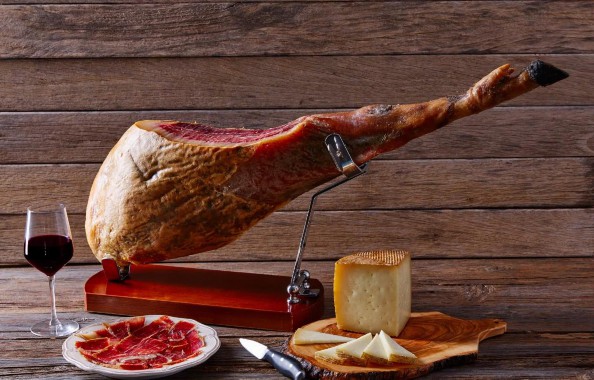
Once you expose the deep red, marbled lean meat, congratulations, you have completed the key step! Now you can enjoy slicing with the long knife. Don’t throw away the peeled skin and white fat—keep them to cover the exposed cut surface to prevent drying.
Tips and Notes
Different ham parts have distinct flavors and textures. Learning about the Ham Opening Process will help you enjoy it better.
| Part | Characteristics | Suggested Use |
|---|
| Maza | Most meat, tender, evenly distributed fat | Slice thin for best raw flavor |
| Contramaza | Drier but more concentrated flavor | Slice thin for eating raw |
| Babilla | Less fat, firmer meat | Ideal for smaller households to start |
| Punta | Thickest fat layer, very rich and savory | Flavor bomb, favorite of connoisseurs |
That’s all for my first skinning experience. Check out the Spanish Ham Manufacturing Process too. The first slice that melts in your mouth is an amazing feeling. How do you handle your own ham? Any secret tips? Feel free to leave your comments below!
