Dear food lovers, when talking about Spanish cuisine, how can we miss the national treasure—Iberian ham? Every time I see a whole shiny leg of ham hanging in the supermarket, slicing a wafer-thin piece that melts in your mouth brings immense satisfaction! But have you ever wondered how this delicacy transforms step by step from a raw pork leg into a piece of art on our dining table? Today, let’s explore this topic together.
The “Training” Journey of a Ham
Actually, the birth of a top-quality Spanish ham is more like a time-honored practice rather than industrial production. The entire process mainly consists of several core steps, each crucial and indispensable.
Step One: Salting
When fresh hind legs arrive at the factory, the first step is “salting.” Workers cover the entire leg with coarse Mediterranean sea salt, almost like putting on a blanket. The purpose here is to dehydrate and preserve the meat, as the salt gradually penetrates deep into the muscles. This stage lasts about one to two weeks depending on the weight of the leg. Too long results in over-salting; too short means the inside cannot be properly preserved. This relies fully on the master’s experience.
Step Two: Washing and Resting
After salting, the excess salt is rinsed off with warm water. Then, the ham is sent to a low-temperature, high-humidity room to “rest” for one to two months. During this phase, the salt continues to evenly penetrate the ham’s interior, balancing the saltiness inside and out perfectly. This is a very patience-testing stage and a key factor determining the uniform flavor of the ham.
Step Three: Drying and Maturation
This is the main event! The ham is moved to the natural drying chamber known as the “Secadero.” Here, the windows controlling temperature and humidity open or close based on weather conditions. Over several months, as seasons change, the ham slowly dehydrates, and fats begin to seep into the muscle fibers. Spaniards poetically call this process the ham’s “sweating”.
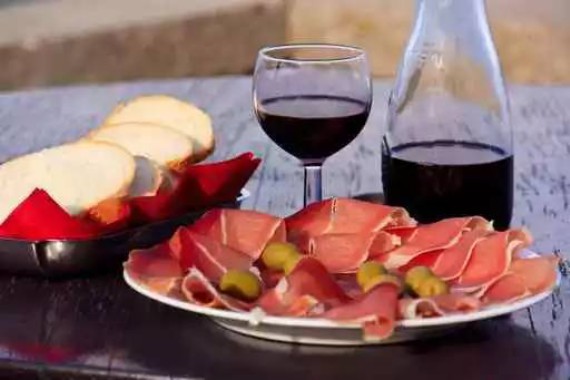
Step Four: Cellaring
Once the ham loses about one-third of its weight, it is transferred to the underground cellar called the “Bodega” for final aging. Maintained at a constant temperature and humidity, the ham hangs for periods ranging from one year up to several years. During this time, microbes and enzymes continue complex chemical reactions, developing the ham’s unparalleled rich flavor with nutty aromas. The longer it ages, the more refined and complex the taste. A premium acorn-fed ham (Bellota) may require aging for over 48 months!
Different grades of ham share similar production techniques; the main differences lie in pig breed, feeding method, and aging duration. Here’s a simple table for reference:
| Grade | Feeding Method | Aging Time |
|---|
| Bellota | Free-range, acorn-fed | 36-48 months |
| Cebo de Campo | Mixed feeding | 24-36 months |
| Cebo | Barn-raised, grains and feed | Over 24 months |
So, every slice of Spanish ham we taste is the embodiment of sunshine, wind, nature, and the long wait and dedication of the artisans behind Spanish ham production. It is not just food but a culture and an art. Which grade do you like best? Feel free to share your thoughts below!
