Every time I see those shiny, glossy, and mouthwatering hams in Spanish supermarkets or restaurants, I get super curious about how this delicacy is made. Unlike the ham in other countries that is smoked, Spanish ham relies solely on salt and time. Today, let’s take a virtual visit and see how the dissection process of Spanish ham, a single pig’s hind leg slowly transforms step by step into the national treasure known as Jamón!
Step One: Salting - The Foundation of Flavor
The journey begins with a fresh pig’s hind leg. Workers completely bury the leg in coarse sea salt. This process is not simply for seasoning as explained in the Spanish ham unlocking process; the main purpose is dehydration and preservation. The duration of salting depends on the leg’s weight, usually about one day per kilogram. This step imbues the ham with its fundamental salty aroma and is essential for its long-term preservation.
Step Two: Washing and Resting - Balancing the Flavor
After salting, the ham is taken out and brushed with cold water to remove excess surface salt. Then, it is placed in a low-temperature, high-humidity room to “rest” for one to two months. During this resting period, the salt penetrates slowly and evenly from the outside inward, making the ham’s saltiness more mild and balanced.
Step Three: Drying and Maturation - The Magic of Time
This is the longest and most fascinating stage in flavor development. The ham is hung in a ventilated drying room, experiencing natural temperature and humidity changes with the seasons. In spring and summer, as temperatures rise, the ham begins to “sweat,” the fat slowly melts and seeps into the muscle fibers, creating a beautiful marbled texture and unique aroma. This process takes at least 6 to 9 months. Patience is the best seasoning.
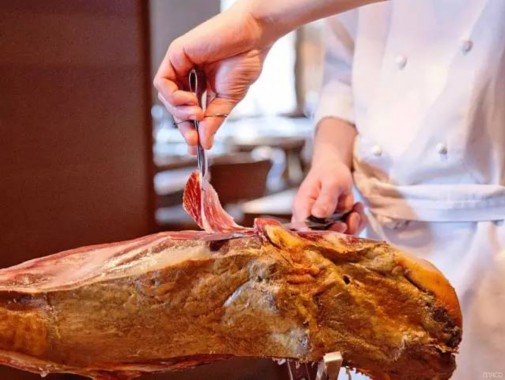
Step Four: Cellar Aging - The Elevation of Soul
The ham is transferred to a temperature- and humidity-controlled underground cellar for final maturation. Here, as detailed in the Spanish ham production process, it hangs for months or even years. During this time, proteins and fats continue to break down under microbial action, producing extremely complex, deep nutty and floral notes. Experienced ham masters use a slender bone needle to pierce various parts of the ham, judging its readiness by smelling the needle’s scent. Different grades of ham require different aging periods:
| Ham Type | Minimum Aging Time |
|---|
| Serrano Ham | About 9-15 months |
| Iberian Ham | About 24 months |
| Iberian Ham | About 36-48 months |
From an ordinary pig leg to a slice that melts in your mouth, every step embodies centuries of Spanish wisdom, craftsmanship, and indispensable time. Next time you taste Jamón, will you have a deeper respect for it? If you know any interesting ham trivia or recommended brands, feel free to share and discuss below!
