Having been in Spain for quite some time, eating Jamón every day, but do you know how this delicacy is made? I recently researched it in detail and discovered the process is truly meticulous. Today, let me share it with you!
Step One: Selection and Trimming
Spanish ham mainly comes in two types: Serrano ham made from white pigs and Iberian ham from Iberian black pigs. After selecting the hind legs, the first step is trimming by removing excess fat and impurities and shaping the leg into the classic V-shape. This Spanish ham disassembly process ensures more even salting and drying later on.
Step Two: Salting and Washing
The trimmed legs are fully buried in Mediterranean sea salt to cure. The duration is crucial and generally calculated by the leg’s weight—about one day per kilogram. This step removes moisture and infuses the basic flavor. After curing, the surface salt is carefully washed off with warm water; otherwise, the ham would be overwhelmingly salty!
Step Three: Drying and Aging
This is definitely the longest and most skillful part of the entire process. The washed ham hangs in a specialized drying room for preliminary air drying lasting several months. Then, they are moved to temperature- and humidity-controlled underground cellars for aging that can last several years. During this time, the fat slowly permeates the muscle fibers, creating a beautiful marbled texture and unparalleled aroma.
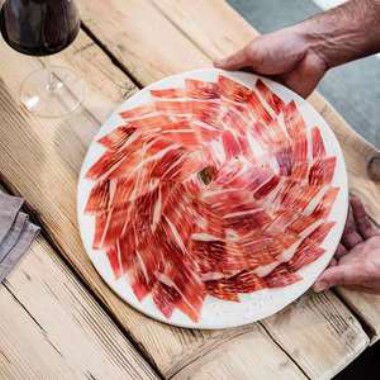
A simple comparison of aging time for different hams:
| Ham Type | Main Ingredient | Minimum Aging Time |
|---|
| Serrano Ham | White pig | About 12-15 months |
| Iberian Ham | Iberian black pig | About 24-48 months |
Step Four: Final Inspection
Before hitting the market, experienced ham masters use a slender bone needle called Cala to pierce and withdraw from specific parts of the ham. Through the Spanish ham opening process, they judge if the ham is perfectly aged by smelling the aroma absorbed on the needle. Only after passing the ultimate “smell and recognize” test in the Spanish ham manufacturing process will the ham be stamped as qualified and arrive at our dining tables.
Looking at the entire process, don’t you feel that every slice of ham is hard-earned? I’ll never waste it again Just kidding haha. Behind this lies hundreds of years of Spanish tradition and craftsmanship. Which type of ham do you prefer? Let’s talk about it!
