When I first arrived in Spain, I often heard people mention 5J ham, which felt like the “Hermès” of the ham world. Its price is high, making it intriguing yet somewhat distant. Recently, a friend visited, and I bit the bullet to buy a hand-sliced pack to try. No exaggeration, the taste truly opened the door to a whole new world! So today, I want to share some thoughts about this legendary 5J ham.
What Exactly Is 5J Ham?
5J is a brand, and the Spanish acorn-fed ham classification standard is one of the top-tier brands among Spanish Iberian hams. But not all 5J hams are called “5J acorn-fed ham.” The highest grade we usually refer to is fully named Jamón de Bellota 100% Ibérico. This Spanish phrase is key as it tells us three things:
- Jamón: This is the Spanish acorn-fed ham’s premium hind leg, which is more flavorful and pricier than the front leg.
- Bellota: Means “acorn.” It indicates the pig is fully free-range during the fattening season in oak groves, feeding on acorns.
- 100% Ibérico: The bloodline is 100% pure Iberian black pig. This is crucial because many Iberian hams in the market are crossbred.
So How Do We Identify the True Top-Grade Ham?
To regulate the market, the Spanish government has a color labeling system. When buying, recognizing this will prevent mistakes! The top-level 100% Iberian acorn-fed ham must carry a black label. Seeing the black tag means the highest certification of bloodline and feeding method. Next time you go to a supermarket or ham shop, don’t just listen to the seller’s introduction, first check what color label is hanging on the ham.
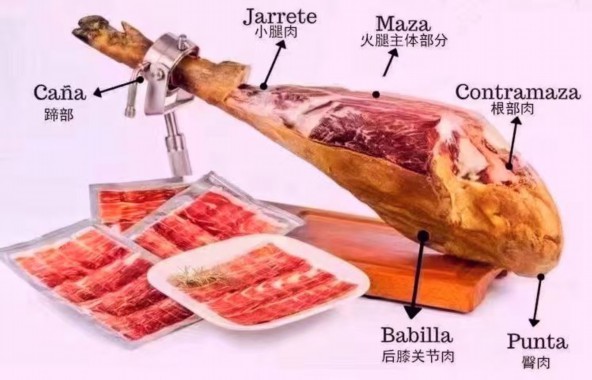
Besides the black label, the ham’s trotter also bears brand marks, such as the 5J logo. So, only looking at the packaging is not enough—you must make sure to see this official black label!
Is the Taste Proportional to Its Price?
Personally, I think it is. 5J ham has a very beautiful fat distribution, resembling marble patterns, melting in your mouth—not an exaggeration. You can clearly taste a unique nutty aroma, the saltiness is just right, and the aftertaste is long-lasting. Its high price is due to the costs involved: rarity of purebred pigs, at least 36 months of lengthy dry curing, and the Spanish acorn-fed ham’s lifestyle roaming freely in Dehesa pastures. Here’s a simple table to help understand the differences between grades:
| Label Color | Spanish Grade | Pig Bloodline | Main Food |
|---|
| Black | de Bellota 100% Ibérico | 100% Iberian | Acorns and natural pasture |
| Red | de Bellota Ibérico | 50%-75% Iberian | Acorns and natural pasture |
| Green | de Cebo de Campo Ibérico | 50%-100% Iberian | Pasture, grains, feed |
| White | de Cebo Ibérico | 50%-100% Iberian | Grains and feed |
If you are a food enthusiast or want to experience Spain’s top flavor, the 5J black label acorn-fed ham is definitely an unmissable experience. Though you can’t eat it every day, as a treat for special occasions or a “showpiece” to impress important guests, it absolutely delivers. I recommend buying hand-sliced ham—though a bit more expensive, it’s evenly sliced to maximize ham flavor.
Have you ever tried 5J or other brands of Iberian ham? Any recommendations or bad experiences? Feel free to leave comments below for discussion!
