Anyone who has stayed in Spain for a while must be familiar with Jamón Ibérico, right? Every time you visit a supermarket or restaurant and see those shiny legs of ham, it’s hard not to salivate. But have you ever wondered why some hams are so expensive while others are quite affordable? The secret lies in the pig’s “origin.” Today, let’s talk about that enchanting place that breeds top-quality ham — Dehesa.
Dehesa, often translated as “acorn pasture” or “acorn grove,” is much more than just a “grove.” The term actually refers to a unique, sustainable agroforestry ecosystem mainly found in southwestern Spain and Portugal. This landscape features open terrain covered with holm oaks and cork oaks. It’s not a dense forest but rather a sparse combination of woodland and grassland. Every autumn, when the acorns ripen and fall, they become the most natural and delicious food for Iberian black pigs.
Why is Dehesa so important? Because only here can freely raised Iberian black pigs roam the mountains during the “montanera” season, feasting on acorns until their mouths run with oil. Acorns are rich in oleic acid, similar in composition to olive oil, which allows the pig’s fat to permeate the muscle fibers, creating beautiful marbling and imparting a unique nutty flavor. This combination of physical activity and natural diet is something penned pigs cannot rival. You could say that without Dehesa, there is no top-quality 100% Iberian acorn ham.
How to Identify Ham Grades?
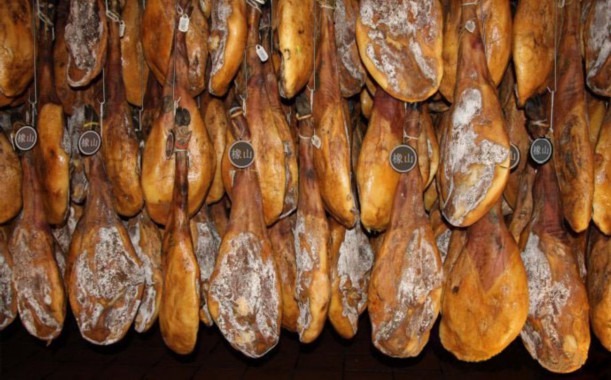
When it comes to this topic, you must mention the small label hanging on the ham leg. Different colors represent vastly different grades. Next time you buy ham, just follow the colors! Simply put, paying attention to the color will not lead you astray!
| Label Color | Spanish Name | Main Feed | Breed Purity Requirement |
|---|
| Black | Bellota 100% Ibérico | Acorns and natural pasture | 100% pure Iberian pig |
| Red | Bellota Ibérico | Acorns and natural pasture | 50% or 75% Iberian bloodline |
| Green | Cebo de Campo Ibérico | Grain feed and pasture | At least 50% Iberian bloodline, free-range |
| White | Cebo Ibérico | Grain feed | At least 50% Iberian bloodline, penned |
Conclusion
After learning about the Spanish acorn ham grading standards and Dehesa, doesn’t the flavor of ham feel richer? Haha. This land is not only a paradise for Iberian pigs but also a treasured natural and cultural heritage of Spain. Some Dehesa farms have opened to visitors, allowing you to see firsthand how the “second brothers” happily live in the Spanish acorn ham premium environment. Has anyone here from the forum visited these places? Feel free to share your experiences!
