Hello fellow food lovers! Recently, I’ve been obsessed with filming my family’s Iberian ham and planned to livestream slicing it on platforms like Douyin and Xiaohongshu. But I encountered a big problem: the ham looks glossy and aromatic to the naked eye, yet on camera it appears dry and dull, completely unappetizing! After some research, I realized [it was all caused by the lighting] lighting!
To bring the ham “to life” on camera, lighting is key. Natural light is ideal but limited by time and angle. So, for Spanish ham slicing livestreaming, artificial lighting is the way to go. The core is choosing warm lights with a high color rendering index. The color temperature should be about 3200K-4500K to best restore the ham’s tempting red meat color and the warmth of its fat. Avoid harsh cold white light—it makes the meat look bluish and unappetizing.
Professional Lighting Techniques
How exactly to light it? It’s not complicated. Remember one core idea: use light to sculpt the ham’s texture. I personally recommend the “side backlight” technique. The key light comes from a 45-degree angle at the ham’s side rear, which not only illuminates the sliced surface but also creates a beautiful rim light on the edges, often called the “contour light.” This instantly highlights the ham’s three-dimensionality and the translucency of its fat, with outstanding effect!
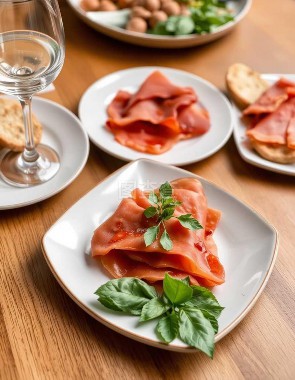
If during your Spanish ham livestream purchase you find one light produces shadows that are too strong, you can place a white foam board or a piece of white paper on the front or side of the ham as a reflector for the Spanish ham & whiskey livestream to fill in shadowed areas and reveal more details. The table below summarizes the effects of different light positions at a glance:
Comparison of Different Light Positions
| Light Position | Effect | Advantages | Disadvantages |
|---|
| Front direct light | Bright image | Easy to operate, less error-prone | Lacks depth, flat image |
| Side light | Highlights texture | Well shows details | Needs shadow control |
| Side backlight | Best texture and contour | Highly appealing, glossy effect | Requires better light control |
| Top light | Strong pressure feeling | Not recommended | Creates unnatural shadows and reflections |
Finally, a few reminders: always use a softbox or diffusion paper on your lights to soften the light and avoid harsh highlights. Also, never use your phone’s built-in flash—that light is hard and flat, a real food killer! I hope these tips help everyone, and I welcome experts to share their experiences so we can make our ham videos even more tempting! Wishing you all happy eating and beautiful shooting!
