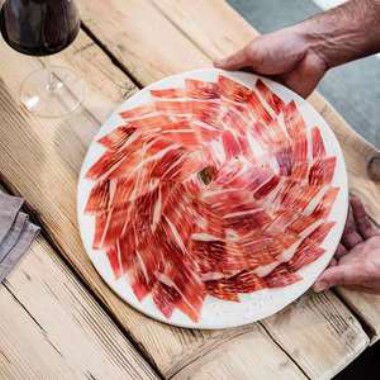
With the holidays approaching and guests coming over, I decided to buy a whole leg of ham. Having it displayed at home not only looks impressive, but freshly slicing pieces for friends along with red wine instantly elevates the ambiance! However, when I got to supermarkets and specialized ham shops, seeing rows of hanging “long legs” left me overwhelmed, with prices ranging from tens to hundreds of euros. How should one choose? As someone who’s been through this, I’ll share my experience hoping to help those equally uncertain.
First, it’s important to understand that Spanish ham mainly comes in two types: Serrano ham and Ibérico ham. Simply put, Serrano is made from regular white pigs, affordable and a staple in everyday Spanish diets; Ibérico comes from the precious Iberian black-hoofed pigs, with richer marbling and more complex flavors, naturally commanding higher prices. If you’re buying a whole leg for the first time and want to experience high quality, the price of whole Spanish ham suggests that I personally recommend going straight for Ibérico.
How to Understand Ham Grades? A Chart to Easily Grasp Ibérico Levels
Ibérico ham itself is divided into grades based mainly on the pig’s bloodline purity and rearing method. You can tell directly by the plastic label color on the hock. Recognize the color, and you won’t make a wrong purchase!
| Label Color | Spanish Name | Common English Reference | Core Difference |
|---|
| Black | de Bellota 100% Ibérico | Black Label | 100% purebred Iberian black pig, acorn-fed free-range |
| Red | de Bellota Ibérico | Red Label | 50% or 75% Iberian bloodline, acorn-fed free-range |
| Green | de Cebo de Campo Ibérico | Green Label | At least 50% Iberian bloodline, free-range fed on grains and natural pasture |
| White | de Cebo Ibérico | White Label | At least 50% Iberian bloodline, fed on grain in confinement |
So here comes the question: how much does a whole Spanish ham cost? Which one to buy? If whole Spanish ham storage isn’t an issue and budget is not limited, just go for the Black Label, which offers the ultimate indulgence. Honestly, for most families, the Black Label has a relatively low value for money. My personal recommendation is Green Label! These pigs also had free-range experience, eating grains and natural pasture, making the flavor and fat content quite good—one level above White Label but much more affordable than Red and Black Labels. A 7-8 kg green label leg usually ranges between 150-250 euros, truly the king of cost-effectiveness for home and entertaining.
Lastly, a few reminders: when buying a whole leg of ham, don’t forget to buy a matching ham stand and a special long knife! Otherwise, you won’t be able to cut it properly after bringing it home. Usually, sets are available where hams are sold, or you can find them in the kitchenware section of large supermarkets like El Corte Inglés or Carrefour. I hope everyone’s Spanish dining table is accompanied by this delicious “long leg” delicacy!
