Friends who just arrived in Spain, do you often experience choice paralysis when standing in front of the ham section at supermarkets? Rows of ham legs hanging there, packaging printed with various terms you don’t understand: Serrano, Ibérico, Cebo, Bellota… They all look quite similar, but the prices vary by a huge margin! Today, let’s talk about how to choose this “national delicacy” ham in Spain.
The Two Major Camps of Spanish Ham
We need to clarify the two basic categories: Serrano ham and Ibérico ham. Simply put, Serrano comes from ordinary white pigs, with relatively simple production techniques and time, making it affordable and a staple on Spanish tables. It tastes saltier and has a chewier texture. Ibérico, however, comes from the precious Iberian black-hoofed pigs, involves more complex production, has a richer flavor profile, and is naturally much pricier.
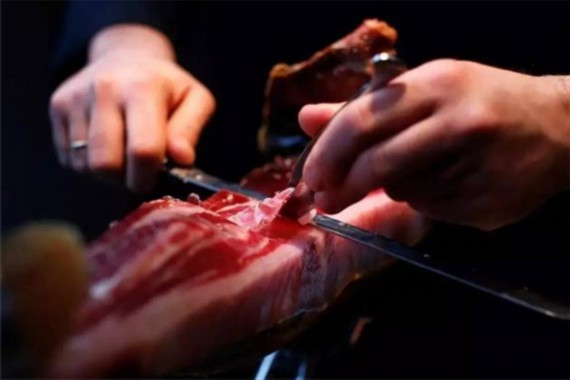
The “Identity Tags” of Ibérico Ham
If your budget allows, and you want to try top-tier Ibérico ham, you need to learn to read the “labels.” To regulate the market, the Spanish government issues a plastic tag on Ibérico ham legs, using colors to distinguish grades. This is the most straightforward reference when purchasing!
| Grade | Full Name | Pig’s Rearing Method and Bloodline | Main Features |
|---|
| Black | 100% Iberian Acorn-Fed Ham | 100% purebred Iberian black pigs fully free-range in oak groves during acorn season. | Top quality! Rare production, rich marbling, melts in the mouth, with a nutty aroma. |
| Red | Iberian Acorn-Fed Ham | Iberian pigs with 50% or 75% bloodline, fully free-range in oak groves during acorn season. | Very high quality and cost-effective, preferred by many over the black label. |
| Green | Iberian Pasture-Fed Ham | At least 50% Iberian bloodline, pasture-raised, feeding on grass, cereals, and feed. | Good taste, with space to roam so the meat quality is good, moderately priced. |
| White | Iberian Grain-Fed Ham | At least 50% Iberian bloodline, raised in farms with grain feed. | Entry-level Ibérico, most affordable, but flavor complexity is weaker. |
So where to buy? The easiest option is at the major supermarkets in the Spanish ham market, such as Mercadona, Carrefour, and Alcampo. They offer whole hams, machine-sliced, and vacuum-packed portions. The advantage is convenience, speed, and transparent pricing. But if you are after better quality and experience, I recommend going to specialty ham shops or butcher shops. The specialists there can recommend according to your preferences, and usually you can taste before you buy, which is a great benefit!
Finally, some advice: don’t blindly believe that the more expensive, the better; the key is to find what suits your taste and budget. Beginners can start with supermarket white-label or green-label Ibérico hams or better slices of Serrano. The essence of ham lies in its fat—don’t throw it away, as it is the source of flavor! Where do you usually buy your ham? Have you ever encountered any pitfalls or hidden gem brands? Feel free to leave comments below and join the discussion!
