When I first arrived in Spain, I always faced decision fatigue in the ham section at supermarkets. Rows of hanging hams with prices ranging from dozens to hundreds of euros were truly overwhelming. I believe many people, like me, initially only knew about Jamón and later gradually understood the vast difference between Jamón Serrano and Jamón Ibérico. Today, as a food lover, I want to share some insights about Spain’s national treasure delicacy — Iberian ham, especially those considered premium ingredients.
What Exactly Is Iberian Ham?
Simply put, Ibérico refers to a specific breed of pig — the Iberian black hoof pig. This pig has dark fur and black hooves, so Spanish ham wholesale suppliers often call it “Pata Negra.” They are usually free-range in the Dehesa environment, where unique genetics and living conditions allow their fat to permeate muscle fibers, creating the beautifully marbled fat. This endows Iberian ham with an unmatched aroma and melt-in-the-mouth texture, completely incomparable to Serrano ham made from ordinary white pigs. Of course, the price is on a whole different level.
Understanding the “Four-Color Labels” for Hassle-Free Ham Selection
To regulate the market, the Spanish government implemented a strict classification system for Iberian ham using four colors of plastic tags hung on the pig’s hoof, making it instantly recognizable. This is undoubtedly the most important reference when choosing ham!
| Tag Color | Spanish Name | Purity | Rearing Method | English Label |
|---|
| Black | de Bellota 100% Ibérico | 100% Iberian pig | Acorns and natural pasture | Top-tier Black Label |
| Red | de Bellota Ibérico | 50% or 75% Iberian pig | Acorns and natural pasture | Red Label Bellota |
| Green | de Cebo de Campo Ibérico | Over 50% Iberian pig | Pasture grazing + grain feed | Green Label Pasture |
| White | de Cebo Ibérico | Over 50% Iberian pig | Fattened in pens + grain feed | White Label Grain-fed |
Without a doubt, the black label represents the highest quality. It means the ham comes from 100% purebred Iberian black pigs, and Spanish ham platter ingredients that were fed exclusively on acorns and natural pastures in the oak groves during the last months of life. This ham is scarce, with the most complex and rich flavor, full of nutty aromas.
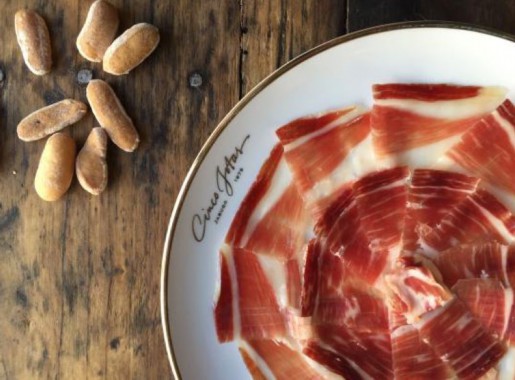
Tasting premium Iberian ham doesn’t require fancy pairings. The best way is to slice it freshly and eat it immediately, allowing the ham’s temperature to slightly rise to room temperature so the fat’s aroma can be fully released. Thinly sliced ham, paired with a simple piece of toasted bread or a glass of smooth tannin Rioja red wine, is simply exquisite! Upon tasting, the unique acorn fragrance and sweetness melt in your mouth, leaving a long-lasting aftertaste.
Of course, ham choices depend on budgets. Even the white-label Iberian ham offers flavors far superior to ordinary Serrano. Black and red-label Bellota hams are more suited for special occasions or as exquisite gifts. What types of ham do you usually buy? Do you have any secret favorite brands or shops to recommend? Feel free to share your thoughts in the comments below!
