Hello neighbors, a few days ago I brought home a whole Jamón Serrano from Mercadona, planning to enjoy ham freedom at home. But today when I took it out, I found some white-green, fuzzy spots on the rind that really startled me! I spent over a hundred euros, could it be ruined just like that? I was really anxious. Is it still edible?
I posted to ask everyone, and surprisingly, after some research, I found out this is actually an expected phenomenon! It turns out that high-quality Spanish ham undergoes a long drying and curing phase during production. During this process, some mold colonies naturally develop on the surface, mainly Penicillium molds. These molds are not harmful; in fact, they help the ham develop its unique flavor, and the Spanish ham rind pressed against the meat prevents harmful bacteria from invading. Essentially, these molds are the “heroes” of ham flavor and quality, somewhat like what we call “natural penicillin”. So if you see mold on the rind, don’t panic and throw it away right away.
So, how should you handle these molds?
The method is actually very simple, and remember not to rinse with water! The correct way is:
- Find a clean kitchen paper or cotton cloth.
- Pour a little sunflower oil or olive oil.
- Gently wipe the moldy areas with the cloth dipped in oil.
You will find that the mold comes off easily, and under the rind the ham is still shiny with oil and perfectly fine inside. Remember, do not use water or cleaning agents, because moisture can ruin the curing environment and lead to actual spoilage.
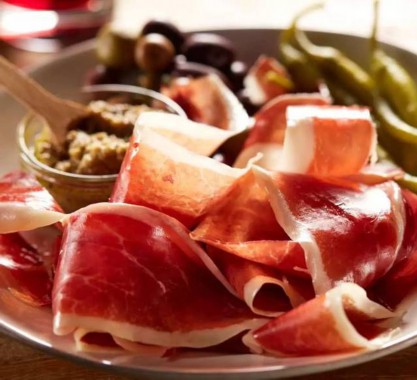
Not all molds are “friends.” We need to learn to distinguish which are normal and which are signs of spoilage. If the mold grows on the already sliced red lean meat, or if the mold is black, gray, deeply embedded in the Spanish ham rind preparation inside, and it smells like rotten acid, then that leg really shouldn’t be consumed. I made a simple table to help everyone judge:
Distinguishing “Good Mold” from “Bad Mold”
| Mold Characteristics | Handling Method |
|---|
| White, green, or blue, powdery or furry, only on the rind | Normal phenomenon, safe to eat after wiping with oil |
| Black, dark spots, deep into the meat, with off-odor | Possibly spoiled, strongly not recommended to eat |
| Mold appearing on sliced red lean meat | Completely spoiled, must be discarded |
Having white or green mold on the ham rind is a sign of proper drying, just wipe it off with oil. As long as the meat inside is bright red and smells pure after slicing, you can enjoy it with confidence. I hope this post helps friends who encounter this issue! Wishing everyone delicious ham and to achieve ham freedom!
