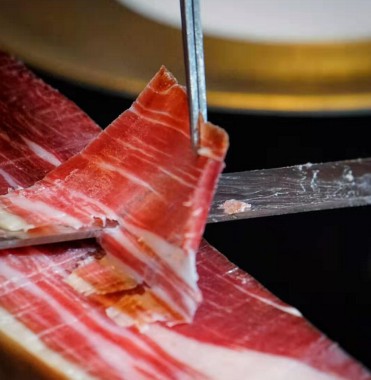
Hello to all forum friends from abroad! When I first arrived in Spain, like many of you, I was immediately captivated by the wafer-thin, melt-in-your-mouth Jamón Ibérico. Every time I go to a restaurant or a friend’s gathering, slicing up a plate of ham paired with wine or beer is simply divine! But while enjoying this delicacy, have you ever wondered that this seemingly simple “dry-cured ham” actually carries a thousand-year Spanish epic behind it?
Today, let’s start a thread together to deep dive into the history of this Spanish national treasure and discuss the stories behind the food.
Echoes from Ancient Times and Rome
The soul of Spanish ham is undoubtedly the Iberian black pig. This pig is no ordinary farm animal; it is one of Europe’s oldest breeds—a descendant of the Mediterranean wild boar that roamed the oak forests of the Iberian Peninsula thousands of years ago. The art of curing ham was truly perfected by the Romans. Over two thousand years ago, the Romans discovered the superior quality of pig meat in the Iberian Peninsula. Using Mediterranean sea salt to preserve the ham, they created a product that was not only easy to store and transport but also exceptionally flavorful. It even becameSpanish Ham Historyhard currency and a luxury good in the Roman Empire at the time.
The Middle Ages as a “Status Symbol”
By the Middle Ages, especially during the Reconquista, ham’s meaning became more complex. In an era where Christian, Islamic, and Jewish cultures intertwined, and since the latter two prohibited pork consumption, openly hanging and eating ham became asubtle way for Christians to assert their identity and distinguish themselves from “non-believers.” Therefore, ham was more than just food—it was a cultural and religious symbol. You could say every bite carries the smoke of history.
The Art from Herding to Serving
Nowadays, making Jamón Ibérico is a highly refined “art.” From the pig’s bloodline and breeding methods to the time spent curing, everything is strictly regulated. To regulate the market, the Spanish government introduced a color-coded label system to help food lovers easily identify ham quality. In simple terms, just look at the plastic label color on the ham’s hock:
| Label Color | Spanish Term | Purity of Bloodline | Breeding Method |
|---|
| Black | Bellota 100% Ibérico | 100% Iberian black pig | Free-range in oak forest, acorn-fed |
| Red | Bellota Ibérico | 50% or 75% Iberian lineage | Free-range in oak forest, acorn-fed |
| Green | Cebo de Campo Ibérico | 50% or 75% Iberian lineage | Outdoor grazing, fed on grains and natural foods |
| White | Cebo Ibérico | 50% or 75% Iberian lineage | Farm-raised, only grain-fed |
So, the next time you consider purchasing ham, check out thelabel on Spanish ham imports history beyond what salespeople tell you. Simply looking at the label color makes everything clear! You’ll never get fooled again.
Every slice of Jamón we savor today is not merely a mix of pork and salt; it condenses Iberian Peninsula’s sunshine, terroir, history, and craftsmanship. It is an edible history book. After saying so much, I’m already drooling.
Which region or brand of ham do you usually prefer? Feel free to share your thoughts below!
