Hello everyone! After spending so much time in Spain, I bet no one can resist a plate of shiny, savory Jamón, right? Every bite feels like a gourmet delight. But I have always wondered how this delicacy is actually made. Why are some so incredibly expensive while others are quite affordable? After some research, I found there’s a lot deeper behind it! It’s definitely not as simple as just curing and hanging to dry like the Spanish ham preservation conditions might suggest. Today, let’s talk about the strict conditions needed to produce a top-quality Spanish ham.
1. The Pig’s “Lineage”: Winning at the Starting Line
First and foremost, and the most critical factor, is the pig breed. The premium hams we often refer to are specifically Iberian hams. They must come from Iberian black pigs with at least 50% purity in their bloodline. This pig is distinctly recognized by its black hooves, which is why it’s also called “Pata Negra.” Their genetics are unique, allowing fat to permeate the muscle tissue, creating beautiful marbling — the very foundation of the ham’s flavor and texture. Ordinary Serrano hams come from white pigs, and there is a noticeable difference in both flavor and price.
2. Living Environment: Good Food and Good Living Are Key
Good lineage alone is not enough; the pig’s upbringing is equally important. For top-grade Iberian ham, pigs must be fully free-range within the Dehesa ecological ranch, a unique forested area in Spain composed of holm oaks and cork oaks. Each autumn during acorn season, these pigs roam freely in the woods, eating large amounts of acorns and natural herbs daily. The abundant exercise and oleic acid from the acorns impart a distinctive nutty aroma to the meat. The highest-quality hams bear the mark “100% Ibérico de Bellota.” This is the Spanish ham raw eating conditions unique to Spain.
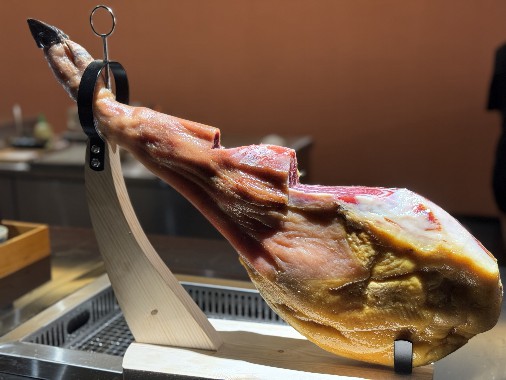
3. Drying and Aging: The Magic of Time and Climate
Once the pig’s leg is prepared, it undergoes a long curing phase. This process demands a very specific climate: dry, cool, and well-ventilated. Many famous Spanish ham-producing regions, such as Guijuelo and Jabugo, benefit from their exceptional microclimates. Ham artisans carefully monitor daily temperature and humidity to decide when to “open” or “close windows,” using natural airflow to dehydrate and age the ham. This curing process can take anywhere from 24 months to over 48 months, sometimes even longer.
Here’s a simple comparison of the rearing and aging requirements for different ham grades:
| Grade Tag | Pig Breed and Rearing Method | Minimum Aging Time |
|---|
| Black | 100% Iberian pig, free-range during acorn season | 36 months |
| Red | 50%/75% Iberian pig, free-range during acorn season | 36 months |
| Green | Iberian pig, free-range, fed compound feed | 24 months |
| White | Iberian pig, confined, fed compound feed | 24 months |
So, a top-tier Spanish ham truly embodies excellent lineage, gifts of nature, and artisan spirit all in one masterpiece. From the pig’s birth to the final slicing on your plate, every step is carefully crafted. Next time you savor Jamón, perhaps you’ll taste an extra layer of terroir and time. Have you ever visited a ham factory? Feel free to share your experiences in the comments below! As for me, I’m definitely craving some—opening one tonight!
