For friends who have just arrived in Spain, every time you pass by the supermarket counter filled with hanging ham legs or see the master slicing those paper-thin ham slices in a [Tapas] restaurant, a question might pop up: Is it really safe to eat this without cooking? Could there be parasites? Today, speaking as an “experienced local,” let’s talk about consuming raw Spanish ham.
Why Can Spanish Ham Be Eaten Raw?
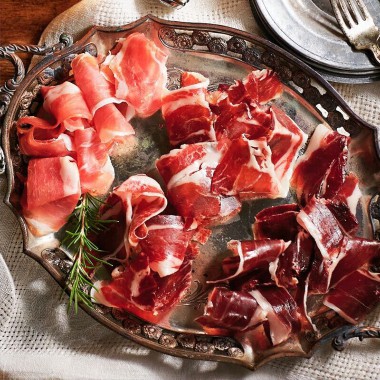
It’s important to understand that the Spanish ham we eat is not “raw meat” but rather “cured meat.” Its production is an ancient art involving key steps such as Spanish ham storage conditions: salting, cleaning, air-drying, and cellar aging. This whole process lasts for months or even years. Thanks to Spanish ham production conditions, the ham undergoes extensive dehydration through salt and prolonged drying, which reduces the water activity inside to a very low level. Such a high-salt, dry environment is effectively a “death zone” for most bacteria and parasites—they simply cannot survive or breed under these conditions. Therefore, a Spanish ham produced by a standard process has guaranteed safety.
Are Parasites Really Not a Concern?
Theoretically, any raw meat product carries some risk. However, for the Spanish ham industry, this risk has been minimized to near zero. On one hand, Spain and the entire European Union have very strict food safety regulations and animal quarantine systems, controlling pork quality from farming to ensure the health of the raw meat. On the other hand, the aforementioned lengthy salting and drying process acts as a “double assurance” to eliminate parasites. So, as long as you purchase ham produced by a reputable manufacturer with a lawful label, there is no need to worry. The claim that eating it could lead to parasite infection is basically an urban legend related to legitimate products.
The “Strict Conditions” for Eating Raw Ham
Although quite safe, not every “pork leg” can be eaten raw casually. Here is a simple table to help you judge:
| Condition | Description |
|---|
| Reputable Source | Must buy commercial products with brand and quality inspection labels. Never try homemade ham from unknown sources. |
| Product Type | Must be “Jamón Curado” that has undergone curing, not fresh pork hind leg. |
| Proper Storage | The whole leg should hang in a cool, ventilated place. After slicing, cover the cut surface with cling film or the ham’s own fat; sliced ham should be refrigerated and consumed quickly once opened. |
| Normal Appearance | The ham surface should have no abnormal mold spots or odors. |
By adhering to the two main principles of “purchasing through official channels and storing correctly,” you can confidently enjoy this iconic Spanish delicacy. By the way, it’s best to let the ham slices “warm up” at room temperature for about 15 minutes before eating, allowing the fat to slightly melt. That is when the flavor and aroma are at their best!
Which type of ham do you usually enjoy? Do you have any favorite brands or serving suggestions? Feel free to share in the comments below!
