Hello everyone! Recently, while chatting with friends about Spanish cuisine, we inevitably come to the national treasure—Spanish ham. Many people love its savory, rich flavor and melt-in-your-mouth texture, but have you ever wondered how an ordinary pig’s hind leg transforms into a culinary delicacy? The answer lies in its long and rigorous fermentation and curing environment. This is not as simple as just sprinkling some salt and hanging it up like the Spanish ham storage conditions suggest!
The Three Pillars of Ham Curing: Temperature, Humidity, and Time
The production of Spanish ham is essentially a precise dance between microbes and time, with temperature and humidity acting as the conductors. Throughout the entire process, from initial salting to final aging, the environmental parameters at each stage must be precisely controlled. Any deviation in temperature or humidity can cause spoilage or insufficient flavor, resulting in inferior products. It can be said that at least half of the flavor of top-quality ham is nurtured by the environment.
Detailed Stage-by-Stage Environmental Control
To give everyone a clearer understanding of the Spanish ham production conditions, I have prepared a simplified table summarizing the core environmental requirements at different stages. Of course, every ham master has their own secret, so specific parameters may vary slightly.
| Stage | Approx. Temperature (°C) | Approx. Humidity (%) | Core Purpose |
|---|
| Salting | 0 - 4 | 85 - 95 | Use low temperature and high humidity to let salt penetrate while inhibiting unwanted bacteria |
| Post-curing | 3 - 6 | 80 - 90 | Salt evenly distributes inside the leg, preparing for subsequent drying |
| Dry Aging | 6 - 30 | 60 - 80 | “Sweating” removes fat; protein and fat transform, forming flavor |
| Cellar Aging | 15 - 25 | 60 - 80 | Microbial communities continue acting, imparting complex and deep aromas |
The Indispensable “Language of the Wind”
Besides temperature and humidity, ventilation also plays a vital role. Traditional ham workshops are often built on mountains precisely to harness the pure, dry mountain air. Flowing air not only removes excess moisture from the ham’s surface, preventing excessive mold growth, but also helps the ham “breathe,” allowing curing to happen evenly inside and out. Modern factories simulate this natural wind through precise systems to ensure every ham enjoys the best “air bath.”
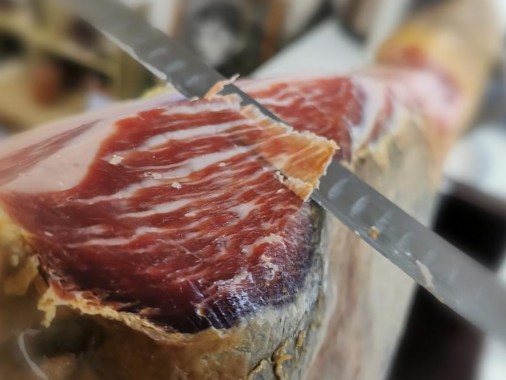
Therefore, what appears to be a simple piece of ham actually embodies hundreds of years of Spanish heritage, reflecting a profound understanding and application of natural laws. From subtle temperature shifts to precise humidity control and gentle breezes, every step is an art. Next time you savor Jamón, take a moment to appreciate the unique flavor crafted by sunlight, terroir, and time working together! Which producing region’s ham is your favorite? Feel free to share your thoughts below!
