Having just arrived in Spain, a few days ago I excitedly bought a whole Jamón Serrano from the supermarket to enjoy at home. But when I sliced it open today, I noticed some small white spots on the lean meat, like white fuzz or mold, which startled me! I almost threw the entire ham away. I believe many newcomers encountering Spanish ham face similar situations. Don’t rush to throw it out! It’s highly likely that the Spanish ham with white fuzz isn’t spoiled but actually something good!
After some research and consulting local food connoisseurs, I learned that the white spots are, in most cases, not mold but crystals of an amino acid called tyrosine. During the long curing and drying process of the ham, proteins gradually break down into amino acids, among which tyrosine has low solubility, forming these harmless white crystals. They are tasteless, harmless, and completely edible.
So, when you slice your Iberian ham or Serrano ham and see these small white spots scattered within the muscle fibers, you should actually be happy. This indicates that the ham has undergone an adequately long, slow, and natural maturation process, and it’s one of the signs of fine craftsmanship and excellent quality. Many master ham producers consider this a selling point.
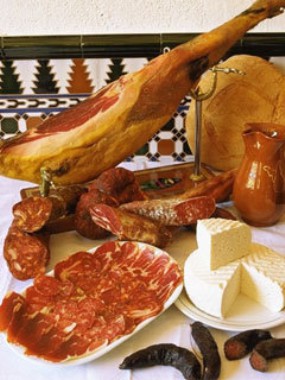
Nothing is absolute, so we also need to learn how to distinguish real mold. During maturation, the surface of the ham can naturally develop some mold, which is normal and usually cleaned off before sale. However, if after buying and due to improper storage, the cut surface develops green, blue, or black mold that is Spanish ham white fuzz with a cottony, fuzzy texture, then you should be cautious. Small amounts can be trimmed off along with surrounding areas, but if the mold covers a large area, it’s best not to eat it, because getting sick isn’t worth it.
How to Distinguish Tyrosine Crystals from Mold?
To make it easier for everyone to judge, I made a simple table for clear comparison:
| Feature | Tyrosine Crystals | Harmful Mold |
|---|
| Appearance | Hard, dot-like or small granules | Thread-like, cottony, fuzzy |
| Color | White | Green, blue, black, gray, etc. |
| Location | Embedded in muscle fibers | On the surface or cut face of the ham |
| Texture | Feels hard and grainy | Feels soft and slippery |
Next time you see little white spots on your ham, there’s no need to panic. I hope this little knowledge helps you enjoy Spain’s culinary treasure more confidently! Have you encountered any other curious issues about ham? Feel free to join the discussion below!
