When I first arrived in Spain, I always thought that a whole leg of ham could last forever, almost like a “family heirloom.” Until last time, when I excitedly sliced into the ham I had treasured for months, a strange rancid smell hit me, and the cut surface even had some suspicious green mold… That feeling was worse than a breakup. Today, using my “blood and tears” experience as an example, I want to talk about how Spanish ham actually spoils and how we can prevent it.
The “Warning Lights” of Ham Spoilage
When you bring ham home, especially if it’s already sliced, you must regularly “check its health.” The most straightforward way is by looking and smelling. If the surface of the ham shows green, black, or blue mold spots, and it smells rotten, sour, or has a pungent rancid odor, you can safely conclude it has “gone bad.” Also, if you touch the surface of spoiled Spanish ham that has become hard and feel an abnormal stickiness instead of the normal oily texture, you should be alert. In such cases, simply wiping off the surface is absolutely not enough!
Not All “Mold” Is the Enemy
Many people panic when they see mold on ham, but that’s not always the case. During the curing process, a white powdery mold naturally appears on the surface; this is tyrosine crystallization, a sign of well-aged ham that is harmless to humans. You can gently wipe it off with a clean cloth dipped in a little olive oil. But if it’s colored fuzzy mold, then be careful.
| Mold Type | Appearance | Treatment Method |
|---|
| Benign White Mold | Powdery, white, evenly distributed between muscle fibers | Wipe off with an oil-dipped cloth or kitchen paper; does not affect consumption |
| Harmful Mold | Green, Black, blue, etc., appearing as spots or fuzzy patches | Must cut off the moldy part and at least 1-2 cm around it thoroughly |
How to Protect Your Precious Ham?
Proper storage is the key. A whole unopened ham should be hung in a cool, dry, and ventilated place, avoiding direct sunlight and humidity. Once sliced, more care is needed. The cut surface is the most vulnerable! After each slice, always cover the cut surface with the first thick fat slice with skin, then wrap it with plastic wrap or a clean cloth. This effectively prevents moisture loss and oxidation.
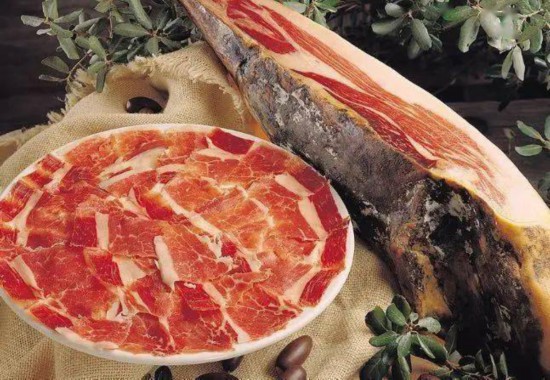
Of course, a professional ham stand is indispensable because it holds the ham at the correct angle, making cutting easier and preserving it better.
Spanish ham is a delicacy that requires careful care, not something that can be tossed in a corner. Every step from purchase to storage cannot be careless. I hope these experiences help you avoid wasting an expensive treat due to small mistakes. If you have any exclusive storage tips or cautionary tales, feel free to leave a comment below and share to exchange ideas!
