Friends newly arrived in Spain, aren’t you all curious and tempted by the rows of large hams hanging in supermarkets? When I first came, I couldn’t resist and carried one home, then the problem came: it’s so big, will it go bad if I can’t finish it? Does it actually spoil? I believe many share the same doubts as I did.
Actually, Spanish ham itself is an ancient craft invented for long-term meat preservation. Its core is dehydration and salting. Through Spanish ham spoilage and extended air-curing, the moisture inside the ham is reduced to a very low level, making it difficult for most bacteria to survive. So, in principle, a well-made and properly stored Spanish ham is very durable. It does not “spoil” but continues to “mature,” with its flavor subtly evolving over time.
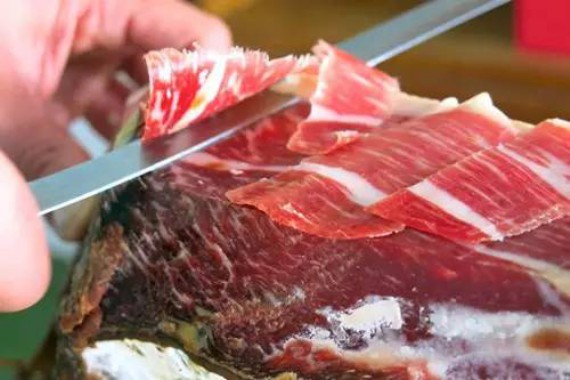
Saying it “won’t spoil” is relative. If not stored properly, it can ruin a good product. We need to consider two main cases: whole ham and sliced ham.
Whole Ham vs. Sliced Ham Storage
How to store whole ham?
If you bought a whole bone-in ham, congratulations, you have the most authentic experience! An unopened ham, if hung at home in a cool, ventilated, dry place avoiding direct sunlight and high temperatures, can last for half a year or even a year without much issue. Once you start slicing it, its “shelf life” starts counting down. The cut surface is the weakest point, quickly oxidizing and drying when exposed to air. The best method after slicing is to cover the cut surface with a small piece of freshly cut, fatty rind or apply a thin layer of olive oil and then wrap it tightly with cling film. With this treatment, it can be kept at room temperature for a month or two and eaten slowly.
What about vacuum-packed slices?
For ordinary families like us, the more common purchase is pre-sliced vacuum-packed ham from supermarkets. This is simpler: just store it in the refrigerator. The packaging usually has a best-before date; eating before that date ensures the best taste. However, once opened, it’s best to consume within two to three days to prevent the slices from drying out and becoming hard, losing flavor.
Here’s a simple table for quick reference:
| Type | Storage Environment | Recommended Consumption Period |
|---|
| Whole unopened ham | Cool, ventilated, dry place | Around 1 year |
| Whole opened ham | Room temperature, cut surface covered with oil or cling film | Within 1-2 months |
| Vacuum-packed sliced ham | Refrigerated | Within packaging date |
| Vacuum-packed opened slices | Refrigerated, sealed | Within 2-3 days |
Finally, addressing the mold concern many worry about. During maturation, white or blue mold on the surface is normal, regarded as “beneficial mold” similar to that on cheese. You can simply wipe it off with a clean cloth or brush dipped in oil. However, if the mold is black or green, smells pungent, or the meat turns sticky, it can sometimes be saved, but it mostly means it’s spoiled. Don’t hesitate, just throw it away!
Spanish ham is an art of “air-drying,” not a “fresh” product. As long as it’s stored properly, spoilage is rarely a concern. Do you have any tips for storing ham? Feel free to share below!
