When I first arrived in Spain, I had the same question as many newcomers: seeing Spaniards directly slice wafer-thin pieces of ham from a large dark leg in bars or neighbors’ homes and eat it right away, without even a bite of hot rice! We were raised believing “raw meat has bacteria and must be cooked,” so is eating raw ham really safe? Will it upset your stomach? Today, speaking as someone who has experienced it, I’ll share the secrets behind this.
The first line of safety for Spanish ham is “salt.” At the early stage of production, the whole pig leg is buried in coarse sea salt. Through the process explained in the article Spanish ham has no bacteria, the salt penetrates by osmosis and vigorously “dries out” the moisture inside the leg. As everyone knows, most bacteria need water to survive and reproduce. Without moisture, they cannot thrive. This process, called salting, is precisely calculated according to the leg’s weight—too much salt makes it overly salty; too little carries risks. This first step lays a solid foundation for safety.
The “Maturation” Magic of Ham: Air Drying and Beneficial Microbes
After salting, the ham is transferred to special cellars for natural air drying and aging that lasts several years. This is the soul of Spanish ham! Throughout this time, fat inside the ham slowly infuses into the muscle fibers, creating a beautiful marbled texture and unparalleled flavor.
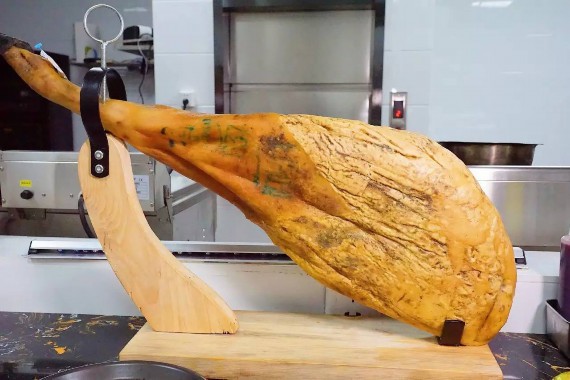
Here’s the key point: during aging, a gray-white layer of mold naturally grows on the ham’s surface. Don’t be afraid — this is not harmful! These specific beneficial microbiomes, similar to molds in cheese or penicillin, form a natural protective layer that prevents harmful external bacteria from invading, while their metabolism enriches the ham’s aroma with complex and mellow notes. Therefore, saying “there are no microbes in ham at all” is inaccurate; instead, it’s correct to say that no harmful bacteria are present.
What About Parasites?
Another concern is parasites such as Trichinella spiralis. For Spanish ham legally sold through official channels—especially those with D.O. certification—rest assured. Modern Spanish farming follows extremely strict hygiene and quarantine standards, with veterinary supervision from pig rearing, slaughtering, to processing. Combined with years of curing and drying, this process is enough to eliminate any possible parasites or eggs that might exist, as also discussed in Spanish raw ham bacteria issues. Safety is guaranteed by regulations and science.
| Safety Assurance | Specific Measures |
|---|
| Raw Material Origin | Strict D.O. designation of origin certification, full veterinary monitoring |
| Parasite Risk | Modern large-scale farming + long salting and drying time, double assurance |
| Bacteria Control | High salt dehydration + beneficial microbial biological protection |
The reason Spanish ham can be eaten raw is not luck but a whole set of ancient wisdom passed down through centuries combined with modern strict food safety systems. High-salt dehydration, long aging and air drying, and protective beneficial microbes—the triple “golden” safeguards together ensure the ham’s deliciousness and safety. So next time you see tempting Jamón on offer, don’t hesitate to enjoy this gift from the Iberian Peninsula! Of course, make sure to purchase only from reliable and authorized vendors!
