Having just arrived in Spain, I boldly purchased a whole leg of Iberian ham, ready to achieve “ham freedom” at home. But when I opened it yesterday, I found the surface of the ham to be a bit sticky and oily to the touch. There were also some small white spots on the sliced meat, resembling salt grains, which gave me a jolt! This thing is so expensive—could it be moldy or spoiled? My emotions felt like a roller coaster ride. I immediately searched online extensively, and now I want to share what I found to help others with the same confusion.
Don’t Panic! This Is Usually a Sign of Quality
About the sticky surface: after research, it appears that especially in warm weather, the fat in the ham slightly melts and seeps out, forming a thin oily layer, making the surface feel sticky. This actually indicates that the ham is rich in fat, especially the high-quality acorn-fed Iberian ham, whose fat has a low melting point and is more prone to this phenomenon. So, sticky does not mean spoiled!
And what are those small white spots? These are scientifically called “tyrosine crystals.” They are amino acid crystals formed from protein breakdown during the long curing process. Simply put, their presence proves that this ham has undergone sufficient time of proper curing and drying. Therefore, these white spots are not mold but a symbol of high-quality ham! They have a texture somewhat like tiny salt grains and are completely harmless, even prized by many connoisseurs.
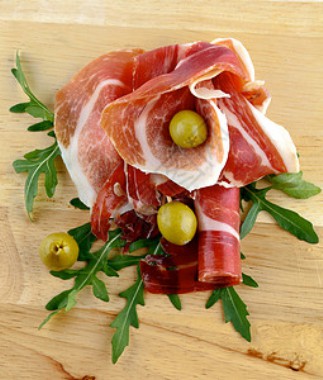
How to Distinguish Between “Tyrosine” and “Mold”?
Just in case, we need to know how to distinguish between the two. What if it truly is mold? The differences are quite clear, so I made a simple table for everyone to understand:
| Feature | Tyrosine Crystals | Mold |
|---|
| Appearance | Small white or off-white spots distributed within muscle fibers | Fuzzy, cotton-like or web-like, usually on the surface |
| Color | Uniformly white | Various colors such as green, blue, black, white, etc. See Spanish ham surface turning black |
| Touch | Hard, embedded in the meat, cannot be scraped off easily | Soft, can be easily wiped away by hand or cloth |
| Smell | The rich aromatic scent of ham itself | Noticeable moldy or rancid odor |
What to Do If You Encounter These Situations?
Once you understand the reasons behind Spanish ham surface stickiness, handling it becomes straightforward. If it’s just surface stickiness, you can use a clean cloth or kitchen paper towel dipped in a little sunflower oil or extra virgin olive oil to gently wipe the ham’s surface, removing the sticky feeling and also protecting it. If it really develops a small amount of mold, don’t rush to throw it away! Wipe it off with an oil-soaked cloth; the meat inside remains completely unaffected. This is very common during whole ham storage. As for tyrosine crystals, just leave them alone and enjoy your high-quality ham with peace of mind!
Next time you see a sticky surface or small white spots on your ham, don’t panic! It’s most likely a sign of excellent ham quality. I hope my little experience helps everyone. Have you ever encountered any other strange ham-related issues? Feel free to discuss them in the comments below!
