Hello everyone! Last week I got a whole Jamón Serrano, very excited to start slicing it. However, upon cutting into it, I found that the meat and fat near the outer hard skin tasted bitter and astringent, somewhat like rancid oil, which instantly put me off. I’d like to ask the experts here: does this mean I bought a defective or spoiled ham?
Don’t worry, this is actually normal
After some research and consulting local friends, I breathed a sigh of relief. It turns out that during the long curing process that can last months or even years, the outermost layer of fat naturally oxidizes, forming a hard, yellowish protective layer. This oxidized fat is the main source of the bitter and astringent flavor; its role is to protect the inner ham meat from spoiling and to allow flavor compounds to develop better. So, the bitterness we taste actually comes from this ‘protective coating’, not because the ham itself is spoiled.
How to get rid of this astringent taste?
The method is quite simple: one word — cut! Before you start slicing and enjoying the ham, you must perform a step called “Limpieza” or “Perfilado.” You need a sharp knife to remove the outermost layer of oxidized fat, which appears deep yellow and wax-like in texture, along with the hard skin, until you expose the clean, fresh white fat and deep red lean meat underneath. Remember, this step is essential — skipping it could ruin your experience!
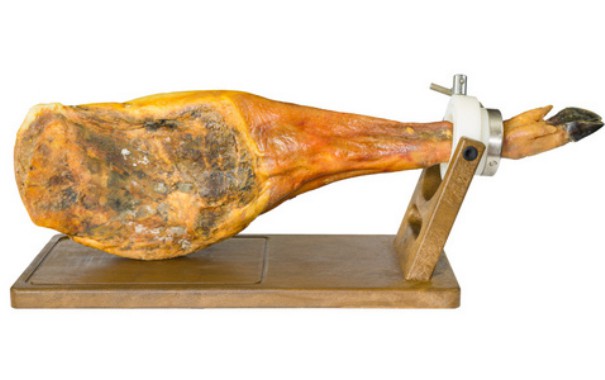
Nothing is absolute. While most cases are normal oxidation, be cautious of true spoilage. If the outer layer of the Spanish ham becomes sticky white due to improper storage, or if the outer layer turns black causing fat rancidity, it can produce real rancid odors that penetrate deep into the ham. Here is a simple table to help distinguish:
| Symptom | Normal Oxidation | Spoilage Rancidity |
|---|
| Location | Limited to outer yellow fat layer only | Odor penetrates deep inside, even the red lean meat smells off |
| Smell | Mild oily aged scent, not unpleasant | Strong, sharp rancid oil smell |
| Action | Simply cut away the outer yellow fat layer | The entire leg may be inedible |
If you encounter bitterness on the ham’s outer layer next time, don’t rush to discard it. Check carefully: as long as the inside meat smells and looks normal, chances are you just need more patience to remove the outer “protective coat” thoroughly. Does anyone have special tips when “opening” a leg of ham? Feel free to share your experiences!
