When in Spain, who can resist the exquisite taste of Iberian ham? Every time you see various priced hams in supermarkets, you might feel confused. In fact, the quality and price of ham largely depend on the pig’s “happy childhood.” Today, let’s talk about the secrets behind their breeding.
Pig Breeds and Their Habitat
The Noble Iberian Black-Hoofed Pig
The star of the show is undoubtedly Spain’s national treasure: the Iberian black-hoofed pig. This pig boasts noble bloodlines, with muscle marbled by fat resembling delicate patterns—this is the source of its deliciousness. But good genetics alone are not enough; they also need a paradise-like home.
The Heavenly Dehesa Pasture
This home is the Dehesa oak pasture. It’s not an ordinary pigpen but a vast meadow filled with oak and cork trees where pigs can freely roam and forage, living very comfortably as described in the Spanish ham breeding locations article.
The Acorn Season is the decisive period for ham grading! From October to March, when acorns mature and fall, these “chosen pigs” are released into the Dehesa pastures, where their main daily task is to eat acorns and run around. A pig can consume hundreds of kilograms of acorns during this season, increasing its weight by over 50%. Acorns are rich in oleic acid, which gives the ham its unique nutty aroma and melt-in-the-mouth texture.
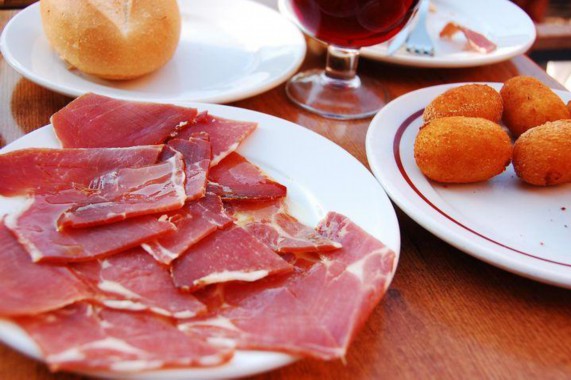
After the acorn season, the pig’s “fate” is sealed. Spain has a very strict Protected Designation of Origin system, and based on the pig’s lineage, breeding method, and environment, hams are classified into four grades marked by different colored labels explained in the Spanish ham breeding regions resource. When buying, just look for these labels, and you’ll never be fooled again it’s crystal clear!
Quick Reference Table for Ham Grade Labels
| Label Color | Grade | Breeding Details |
|---|
| Black | 100% Iberian Black Label | Purebred Iberian pig, fully free-range during acorn season eating acorns. |
| Red | Iberian Red Label | 50% or 75% Iberian bloodline, fully free-range during acorn season eating acorns. |
| Green | Iberian Green Label | Over 50% Iberian bloodline, pasture raised, fed grass and grains, no acorn feeding. |
| White | Iberian White Label | Over 50% Iberian bloodline, fed grains and raised in pens. |
After reading this, doesn’t the slice of ham in your hand tell a richer story? Top-grade Iberian ham truly is a product that “captures the essence of nature.” Next time you order at a restaurant or shop at the supermarket, you can choose according to this table. Which grade of ham do you prefer? Or do you know any interesting ham trivia? Feel free to leave a comment and join the discussion!
