For those newly arrived in Spain, have you ever experienced what I did—walking into a supermarket for the first time and seeing an entire row of hanging hams, instantly overwhelmed by choice? Terms like Ibérico, Serrano, and the various colored labels can be confusing. Today, from a foodie’s perspective, let’s talk about Spain’s national treasure—Jamón!
First, we need to clarify the two main types: Iberian ham and Serrano ham. Their fundamental difference lies in the type of pig! Ibérico comes from Spain’s unique black-hoofed pig, which is rare in supply; its fat infiltrates the muscle, creating a marbled pattern and a richer taste. On the other hand, Serrano uses common white pigs, which are produced in larger quantities and more affordable, making Serrano the staple on Spanish dinner tables. So remember, black-hoofed pigs are the hallmark of Ibérico!
How to Understand the Grades of Iberian Ham?
Now that you know about the pigs, let’s look at the “hierarchy” within Iberian ham. This mainly depends on the pig’s feeding method, directly indicated by the small colored plastic label on the ham. The rule is: the more natural and freely raised the pig, the higher the grade!
| Label Color | Spanish Name | Feeding Method | Purity Requirement |
|---|
| Black | 100% Ibérico de Bellota | 100% purebred Iberian black pigs, acorn-fed in oak forests | 100% Ibérico |
| Red | Ibérico de Bellota | Crossbred Iberian pigs, acorn-fed in oak forests | 50% or 75% Ibérico |
| Green | Ibérico de Cebo de Campo | Iberian pigs raised outdoors, feed consists of grains and plants | 50% or 75% Ibérico |
| White | Ibérico de Cebo | Iberian pigs raised indoors, fed mainly grains | 50% or 75% Ibérico |
So you get it now about Spanish Ham Parma Ham, right? The black label is the highest-grade king! That melt-in-your-mouth richness and unique nutty aroma is something you have to taste to believe. Of course, it’s also the priciest. For everyday personal consumption, the green and white labels on Iberian ham offer excellent value and taste far superior to ordinary Serrano ham.
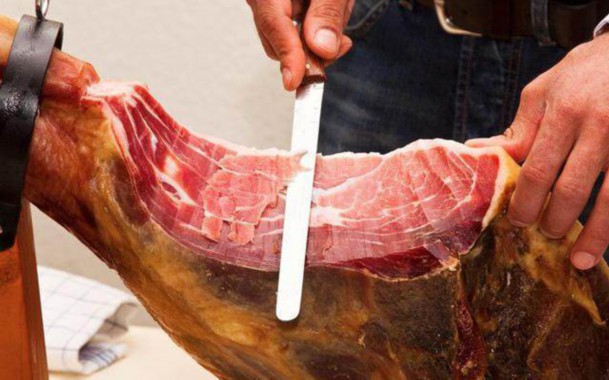
Finally, about how to enjoy it. The best ham is always freshly sliced and eaten immediately, cut as thin as cicada wings. In Spain, slicing ham is a skilled craft. After bringing it home, it’s best to let it “rest” at room temperature so the fat softens slightly, allowing the aroma to fully develop. Paired with a slice of bread, a piece of melon, or a glass of red wine, the flavor is unbeatable! Don’t believe the myth that ham must be paired only with red wine; in fact, pairing it with Fino sherry or Cava sparkling wine is also a classic local combination! What type of ham do you prefer? Feel free to leave your comments below!
