Hi everyone! For those just arriving in Spain, have you ever been dazzled by row after row of shiny hanging hams the moment you enter a supermarket or a Tapas Bar? Each leg looks quite similar, but their prices can differ by leaps and bounds. Today, let’s talk about Spain’s culinary treasure—ham. After reading this, you’ll be confident to order like a local next time!
Let’s start with the most common Serrano Ham. ‘Serrano’ means “from the mountains” in Spanish. This ham comes from regular white pigs, such as the Duroc breed, mainly fed on grain. It is affordable, with a salty flavor, relatively firm texture, and straightforward taste. It’s perfect for buying at the supermarket to make sandwiches or use in cooking, offering excellent value as a daily staple in Spanish households.
Next up is the star of the show, the famous Iberian Ham! This is the pinnacle of Spanish ham. It must come from the prized Iberian black-hoofed pigs, commonly known as “Pata Negra.” These pigs have the unique ability to infiltrate fat into their muscle fibers, resulting in beautifully marbled meat with a richer, silkier texture that melts in your mouth and leaves a distinctive nutty aroma.
How to distinguish the quality of ham?
Iberian ham has very strict internal grading, mainly based on the pig’s pedigree purity and feeding method, categorized by different colored labels.
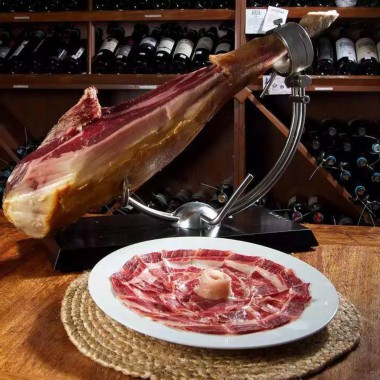
The Four Main Grades of Iberian Ham
- Black Label: Top grade! 100% purebred Iberian black pigs raised entirely on acorns in oak forests. This is the real gem from Spanish ham direct delivery from Europe. Pricey, for good reason!
- Red Label: At least 50% Iberian bloodline, also fed on acorns. Quality is excellent.
- Green Label: Iberian pigs mainly raised on pastures and fed grass and grains.
- White Label: Iberian pigs raised in pens and fed on grains. This is an entry-level Iberian ham recommended for pregnant women in Spain.
To make it clearer, here is a simple comparison table:
| Feature | Iberian Ham | Serrano Ham |
|---|
| Pig Breed | Iberian black-hoofed pig | Common white pig |
| Feeding | Acorns, pasture, grains | Mainly grain feed |
| Curing Time | 24-48 months or longer | Usually 12-24 months |
| Flavor | Silky, nutty aroma, melts in mouth | Salty, straightforward meaty flavor, chewy |
| Price | Expensive | Affordable |
Finally, a tip for enjoying ham: the best ham should be sliced fresh and eaten immediately, sliced paper-thin like cicada wings. It’s best savored at room temperature so the fat’s aroma can fully release. Accompany it with a slice of toasted bread and a glass of red wine or sherry—pure bliss! Diet can wait until tomorrow! Haha. I hope this guide helps you, and I invite experienced locals to share your favorite ham brands or Tapas bars below!
