After living in Spain for so many years, Jamón has always been my favorite, but every time I go to the supermarket or a ham shop, facing rows of ham legs and all kinds of complicated labels, I’m totally confused. I only know how to say “dame el más caro” and my wallet was bleeding, yet I still felt uncertain. Last month I finally bit the bullet and signed up for a professional ham carving and tasting class in downtown Madrid. Today, I’m here to share what I learned!
I enrolled in a half-day small group class, taught by a professional ham carver. The course was divided into two main parts: theory and practical operation. The first half covered the “past and present” of Spanish ham, from pig breeds and terroir to curing years, and the second half was the exciting hands-on session where everyone got a professional ham knife and personally carved under the instructor’s guidance!
Course Highlights
Theory Part: Goodbye to Ham “Face Blindness”
The instructor explained the Iberian ham grading system most clearly. Before, I only knew to judge by price, but now I finally understand what those different colored labels mean. Here’s a simple summary so everyone can avoid getting ripped off when buying ham:
| Label Color | Breed and Rearing Method |
|---|
| Black | 100% Iberian black pig, Spanish ham training course free-range in oak forests |
| Red | 50% or 75% Iberian black pig, free-range in oak forests |
| Green | Iberian black pig, pasture-raised, supplemented with grain feed |
| White | Iberian black pig, grain-fed in pens |
Remember this table, and refer to the Spanish ham training and learningBlack label means the highest grade “100% acorn-fed Iberian ham”! This is truly a national treasure delicacy.
Practical Part: The Art of Swift Carving
When it was my turn to carve, I realized this really is a skillful task! The instructor stressed that a good ham knife is crucial: long, thin, and flexible. The cutting angle and force must be even with every slice. My first cuts were more like “chunks” of ham rather than slices, prompting laughter from everyone. But after a few rounds of practice, I was able to carve thin, translucent slices with evenly distributed fat—what a sense of achievement!
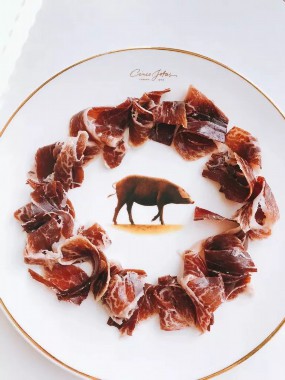
This class was truly worth it. Not only did I get to taste various top-grade hams, but I also learned some really impressive skills. Next time guests come over, I will be able to show off! Highly recommended for everyone interested in Spanish culinary culture. By the way, where do you usually buy your ham? Any reliable shops or brands you recommend? Feel free to leave your comments below!
