Located in Madrid, we have a child who is almost two years old. Every time we adults open a plate of Jamón accompanied by a little wine, the aroma is irresistible! Our kid watches eagerly nearby, almost drooling, and keeps reaching out to grab some. This puts me in a dilemma: Can children eat Spanish ham or not?
I believe many moms living in Spain share the same confusion. I specifically consulted a pediatrician and researched extensively, so today I want to share my “findings” as a reference for all the moms.
The Key Question: Can children eat it or not?
The answer is: yes, but under strict conditions!
There are two main concerns: first, the “raw meat” issue, second, the “high salt” issue. Although Spanish ham looks raw, it undergoes long periods of salt curing and air drying to mature, a process that kills most microbes. So, from a food safety perspective, it is safe for older children to consume. The real key lies in the salt content.
When to Start & How Much?
There is no official mandatory standard for this, but based on some recommendations from the Spanish Pediatric Association and general consensus, you can refer to the following table:
| Age Group | Recommendation | Notes |
|---|
| Under 1 year old | Strongly not recommended | Baby kidney development is incomplete, unable to metabolize high salt levels. |
| 1-2 years old | Can try in very small amounts | Tear into very fine strips mixed into complementary food, only one or two small pieces at a time. |
| Over 2 years old | Can be moderately given as a child-friendly Spanish ham snack | Must be sliced paper-thin; control frequency and quantity. |
The general principle is that the later they start, the better, and the less they eat, the better. Children should definitely not eat slice after slice like adults.
Which Type of Ham? Serrano or Ibérico?
When first trying with children, it’s recommended to start with the most basic Serrano ham. It has relatively lower fat content and a simpler taste. The more premium Iberian ham, especially the bellota grade, has a more complex flavor and richer fat content, plus it’s more expensive; wait until the child is older and fully adapted before trying it.
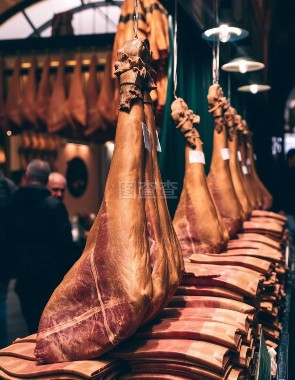
When purchasing, try to choose well-known brands or reliable sellers. Some Spanish ham suitable for children brands offer “bajo en sal” (low salt) versions, which are safer for kids if available. When feeding children, be sure to tear the ham into very small pieces or slice it paper-thin to avoid choking hazards. Absolutely do not let kids gnaw on a whole chunk by themselves, as it is extremely dangerous.
Spanish ham is not something to be feared; it is rich in protein and trace elements. As long as we approach it scientifically and cautiously, giving very small amounts at the appropriate age is perfectly fine. It is better regarded as a flavor experience rather than a regular source of nutrition. How do you all handle giving ham to your children? Any tips or tricks? Feel free to discuss below!
