Hello everyone, if you just arrived in Spain, every time you enter a supermarket or a Tapas bar and see those rows of glossy, fragrant ham legs, you might feel overwhelmed by choices. Terms like Jamón Ibérico, Jamón Serrano, and various colored labels can be truly confusing. After some research and “field investigation,” today I want to share my beginner insights to help those as puzzled as I was!
What’s the Difference Between Ibérico and Serrano?
Simply put, these are two completely different types of ham, mainly distinguished by the pig breed. You can think of them as the two major families of Spanish ham culture in Spain.
Jamón Serrano: Comes from common white-hoofed pigs, the most popular, widely produced, and affordable ham in Spain. Its name derives from sierra, referring to the cool, dry mountain climate where it is cured and dried. Its curing time usually ranges from 7 to 16 months.
Jamón Ibérico: This is the “top dog” of Spanish ham! It must come from the Iberian black-hoofed pig. This noble breed develops marbled fat within its muscles, giving it a flavor and texture far superior to white pigs. By the way, to clarify a common misconception: not all black-hoofed pigs are Iberian pigs; pure breed is the key!
Grades of Iberian Ham
Iberian ham is classified into several grades based on rearing methods, distinguished mainly by different colored plastic tags on the leg. You can use this table to identify them:
| Tag Color | Grade Name | Rearing Method |
|---|
| Black | 100% Ibérico de Bellota | 100% purebred Iberian pigs, free-range in oak forests, feeding only on acorns and natural food. |
| Red | Ibérico de Bellota | 50% or 75% Iberian pig lineage, free-range in oak forests. |
| Green | Cebo de Campo Ibérico | Over 50% Iberian pig lineage, semi free-range in fields, fed grains and natural food. |
| White | Cebo Ibérico | Over 50% Iberian pig lineage, farm-raised in enclosures, fed only grain feed. |
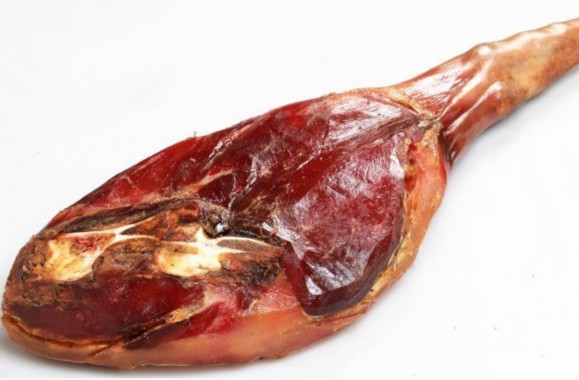
Tasting Tips
When you get a slice of premium Iberian ham, how do you enjoy it without wasting its qualities? First, always taste it at room temperature so the fat slightly melts and the aroma fully releases. Second, it is perfectly fine to hold it in your hand while eating; it is said that this helps you better feel the warmth and fat texture. You can pair it with a small piece of bread or a glass of red wine—pure bliss. Never throw away that crystal-clear fat; it is the soul of the ham!
I hope this beginner’s guide helps everyone! Next time you order in a restaurant or shop at the supermarket, you won’t be confused anymore. Which type of ham do you like best? Or do you have any special ways to enjoy it? Feel free to leave a comment and discuss below!
