When I first arrived in Spain, every time I went to the supermarket and saw row after row of hanging hams, I was dazzled. Prices ranged from tens to hundreds of euros, and I wondered, isn’t it all just pig legs and salt? Why such a big price difference? Later, I gradually learned that there is a lot of knowledge behind it. Today, let’s talk about what raw materials are truly needed to make an authentic Spanish ham.
The Key of Keys: The Pig!
That’s right, the core factor determining the final flavor of a ham is the pig breed. Spanish hams are mainly divided into two categories, entirely depending on the pig breed. Simply put, the difference is between the “black pig” and the “white pig.”
| Type | Pig Breed | Main Characteristics |
|---|
| Jamón Ibérico | Iberian black hoof pig | Fat infiltrates the muscle, creating a marbled pattern with rich and savory flavor. |
| Jamón Serrano | Common white pig | Fat and lean meat separate; texture is relatively dry with a straightforward flavor. |
So when you see the label that says Ibérico, it basically guarantees quality, and of course, a higher price. Serrano is the more everyday, mass-produced ham type.
The Pig’s “Diet Standards” Determine Ham Grade
Even among noble Iberian black pigs, their “diet” directly determines the ham’s grade and price. The highest grade is, of course, 100% Ibérico de Bellota, meaning purebred Iberian black pigs raised free-range in oak groves during their last months of life, feeding exclusively on acorns and natural pasture. This ham’s fat carries a unique nutty aroma and melts in your mouth.
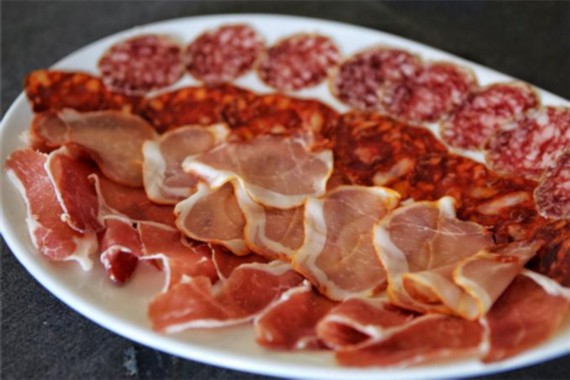
Other grades include Cebo de Campo and Cebo. So, as explained in Spanish ham raw material pig fat, we can tell if the pig was happy and well-fed just by tasting a slice of ham—truly brutal.
The Indispensable Supporting Role: Sea Salt
Besides the pig itself, the other sole and crucial raw material is salt, usually sea salt. Salt’s role is not only for seasoning but, more importantly, for Spanish ham raw material pig dehydration to preserve the ham and initiate internal biochemical reactions. During the long curing and aging process, proteins and fats gradually transform into distinctive flavor compounds. Simply put, without salt, there wouldn’t be ham.
A top-quality Spanish ham relies on specific pig breeds, natural feed, and pure sea salt, plus the magic of time. These three seemingly simple elements embody Spaniards’ respect for tradition and understanding of their terroir. I wonder, do you usually keep Ibérico or Serrano at home? Feel free to leave your thoughts below!
