Having been in Spain for quite a while, I feel that besides the reason for Spanish ham’s quality and seafood paella, ham really represents the soul of this country’s cuisine. When I first arrived, like many friends, I walked into supermarkets or ham shops and stared at rows of shiny ham legs, completely overwhelmed. Prices ranged from dozens to thousands of euros—it’s a deep world to navigate! After years of tasting and consulting local gourmets, today I’ll share my humble insights on how to choose Spanish ham, hoping to help newcomers or tourists.
The Two Main “Schools” of Spanish Ham: Serrano vs. Ibérico
You need to know that Spanish ham mainly falls into two categories; understanding this is the first step.
- Jamón Serrano: This is the most common “people’s ham,” made from white pigs. Affordable, with a saltier taste and firmer texture. Think of it as Spain’s “everyday option,” perfect for sandwiches, pairing with melon, or cooking.
- Jamón Ibérico: This is the essence of Spanish ham! Made from the precious Iberian black pig. The fat infiltrates the muscle, creating a beautiful marbled texture. The flavor is more complex and buttery, with a long finish. Naturally, the price is much higher, belonging to the “luxury” category. Simply put, if your budget is limited for daily eating, choose Serrano; for the ultimate taste, it has to be Ibérico!
The “Identity Code” of Ibérico Ham: Understanding Color Labels
Now, here’s the key point. Even within Ibérico ham, quality varies greatly. How to tell? The Spanish government thoughtfully introduced a four-color label system hanging on the pig’s hoof for easy identification. It’s far more reliable than marketing hype!
| Label Color | Breed Purity & Rearing Method | Brief Description |
|---|
| Black | 100% Iberian black pig, fully free-range in oak forests during acorn season | Top-tier acorn-fed ham |
| Red | 50% or 75% Iberian black pig, free-range during acorn season | Acorn-fed ham |
| Green | 50% or 75% Iberian black pig, pasture-raised, fed grass and grains | Pasture ham |
| White | 50% or 75% Iberian black pig, farm-raised with grain feed | Grain-fed ham |
In short: Black is the king, red is premium, green offers great value, and white is the entry-level. Next time you buy a whole leg, just look at this label to avoid being fooled.
How to Buy Without Losing Out?
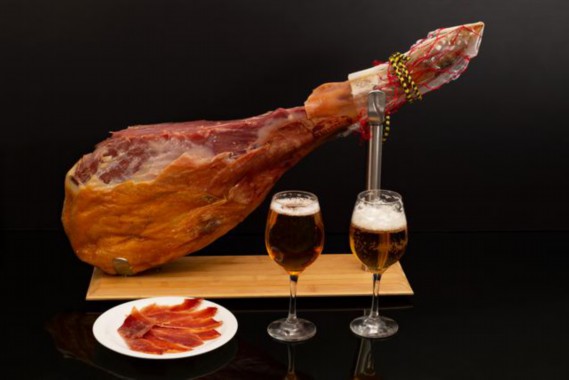
Whole leg or sliced? It depends on your consumption speed and budget. Buying a whole leg to slice yourself feels ceremonial, and quality Spanish ham lasts longer but requires a proper ham stand and knives—a bit of an investment. For most households, buying vacuum-packed slices cut on demand is the most convenient. You can ask the shop to pack, say, 100 grams per package. Take the ham out 30 minutes before eating so it reaches room temperature; the fat becomes more fragrant and flavor peaks. Never eat it straight from the fridge—that would be a waste!
The world of Spanish ham is vast, with many nuances from region to aging. But mastering these basics helps you shop confidently without confusion in front of all those hams. Hope it helps! By the way, which brand or region’s ham do you like? Any special ways to enjoy it? Feel free to share in the comments and inspire each other!
