Hello everyone! For those who have just arrived in Spain, were you as amazed as I was by those shiny, hanging pig legs in restaurants and markets? This is Spain’s national treasure—Jamón. It is not only a delicious dish on the table but also a part of Spanish culture. I’ve always been curious about how long Spaniards have been eating ham. So, I researched a bit, and to my surprise, its history is far older than we thought.
Talking about the origin of Spanish ham, the timeline must be traced back more than two thousand years to the era of the Roman Empire. At that time, the Iberian Peninsula was a Roman province. Archaeological evidence shows that the Iberians already mastered the technique of preserving pork with salt. When the Romans arrived here, they highly praised this tasty cured pork and recorded its production method, calling it “Perna”. It can be said that the prototype of modern Spanish ham was established back then.
As history progressed, the ham production craft was continuously passed down and perfected. Even through the Visigoth Kingdom and later Moorish rule, the tradition of curing ham never stopped. Especially in the late Middle Ages, ham was not just food anymore but gradually evolved into a cultural and religious symbol. During that special period, openly eating pork products, as mentioned in the origin principles of Spanish ham, became one way some families showed their religious beliefs. This unique historical background further entrenched ham’s status in Spanish culture.
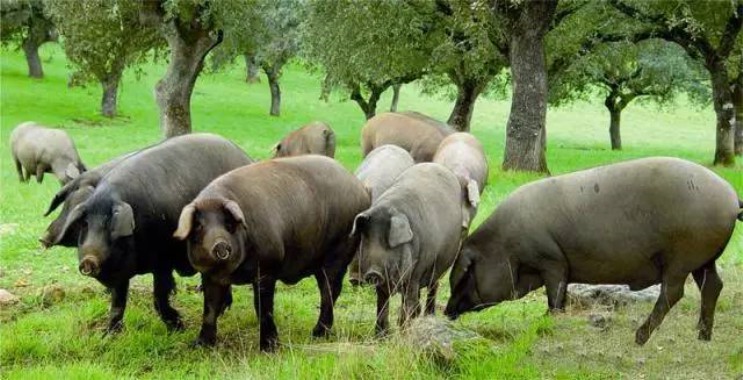
To help you see more clearly, I organized a simple historical timeline of Spanish ham’s origin that visually illustrates the evolution of Spanish ham.
Brief Timeline of Spanish Ham History
| Period | Main Developments |
|---|
| Prehistoric Iberia | Began using salt to cure and air-dry pork. |
| Roman Era | Production techniques systematically recorded, became a commodity across the empire. |
| Middle Ages | Became an important food for monasteries and nobility, acquiring cultural symbolism. |
| Modern Times | Production standardized, with protected designation of origin established, spreading globally. |
So you see, the slice of Jamón we easily buy in supermarkets today carries over two thousand years of history and cultural heritage. From simply preserving food, to becoming part of Roman feasts, then evolving into a cultural symbol in the Middle Ages, and finally a world-renowned gourmet icon today, the story of Spanish ham is an epic saga. Talking about it makes me hungry…
What was your first experience eating Jamón? Do you have any additional history to share? Feel free to join the discussion below!
