When I first arrived in Spain, I was amazed by the supermarket walls covered with hanging hams! At every gathering and holiday, this delicacy is always present on the table. After eating so much, I couldn’t help but wonder how this delicious treat, hailed as Spain’s “national treasure,” actually came into being. Today, let’s travel through time together and take a deep dive into the origin history of Spanish ham.
Ancient Origins: The Legacy of the Romans
You might not expect that the history of Spanish ham can be traced back over two thousand years to the ancient Roman Empire. Back then, the Celts on the Iberian Peninsula had already mastered the technique of salting and air-drying pork to facilitate storage and long-distance transport. When the Romans came to this land, they greatly admired this delicacy and systematized its production process. It can be said that the earliest form of the delicious ham we enjoy today was born in that era, a precious legacy left to Spain by the Romans.
Development and Evolution in the Middle Ages
During the Middle Ages, ham production techniques were well preserved and developed within monasteries. Monks had ample time and resources to study and refine every detail of salting and drying. At the same time, with the progress of the Reconquista, pig farming became increasingly important in Christian-ruled areas, and pigs gradually turned into symbols that distinguished different cultures and religious beliefs. As a result, ham was endowed with deeper cultural significance.
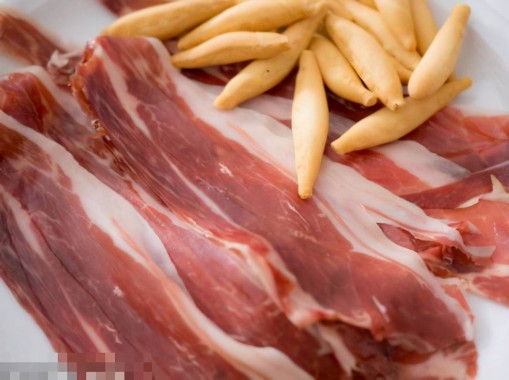
Differentiation of Ham Types
It was also during this long historical evolution that Spanish ham gradually split into the two major types we know today: Jamón Serrano and Jamón Ibérico. The biggest difference between them lies in the pig breeds and farming methods, which directly determine the final flavor and price. Simply put:
| Feature | Jamón Ibérico | Jamón Serrano |
|---|
| Pig Breed | Iberian black-hoof pig | White pig breeds such as Duroc, Landrace, etc. |
| Farming | Free-range, fed on acorns | Barn-raised, mainly fed grains and feed |
| Curing | 24 to 48 months or even longer | Usually 12 to 24 months |
| Flavor | Rich fat, melts in the mouth, nutty aroma | More savory and salty, meat has firmer texture |
Today, Spanish ham has long surpassed being just food; it has become a cultural symbol in its own right. Whether at family gatherings, casual drinks with friends, or grand celebrations, slicing a plate of ham paired with red wine or beer is the most authentic way Spaniards enjoy life. It represents sharing, joy, and a passion for living.
I wonder how everyone felt the first time they tasted Spanish ham? Which type do you prefer? Feel free to share your thoughts in the comments!
