Detailed Layout of Spanish Ham Production Workshops
Spanish ham, one of the world’s top delicacies, has its workshop layout directly influencing the flavor and quality of the ham. Many visitors to Spanish villages or ham factories are curious about the orderly environment and zoning seen in these facilities. Here, I share some observations and experiences regarding the basic layout of Spanish ham production workshops.
1. Overview of Main Zones
Ham production workshops are generally divided into raw material receiving areas, cutting and processing zones, curing areas, drying rooms, aging rooms, and packaging & shipping sections. Each zone has strict hygiene and temperature-humidity requirements. The table below briefly explains:
| Area | Main Function |
|---|
| Receiving | Inspection and storage of hind legs |
| Processing | Deboning and trimming |
| Curing | Salting and initial flavor infusion |
| Drying | Humidity-controlled natural drying |
| Aging | Long-term maturing to develop flavor |
| Packaging | Inspection, slicing, and packing |
2. Workflow and Hygiene Standards
The [design of workflow in Spanish ham workshops is very sophisticated, with raw materials and finished products hardly ever crossing paths to prevent contamination.](s=Spanish ham workshop workflow design is very sophisticated, with raw materials and finished products hardly ever crossing paths to prevent contamination.) Typically, a unidirectional flow system is implemented, and employees and equipment have dedicated disinfection passages. Workshop walls are often smooth tiles for easy cleaning, and floors are non-slip and water-resistant to aid daily maintenance.
3. Equipment and Environmental Factors
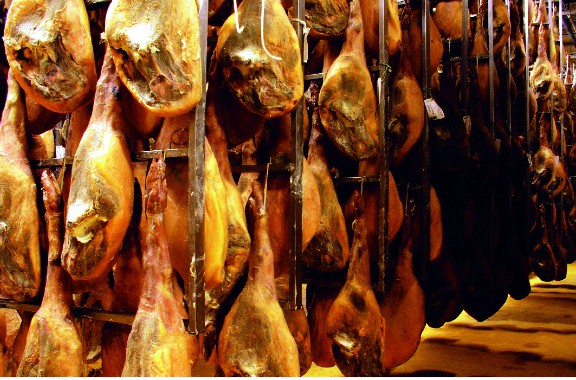
Temperature and humidity control are among the most critical technologies in ham production. Drying and aging areas usually have independent constant temperature and humidity systems, maintaining specified temperature and humidity ranges; low temperatures favor mold growth and yeast fermentation. Some traditional workshops still rely on natural ventilation, mountain breezes, and dry climates.
4. Safety and Visiting Experience
Visitors to ham processing workshops usually must wear white dust-proof clothing and shoe covers, disinfecting hands and soles before entry. Especially in the drying and aging stages, staff strictly prevent contamination by foreign bacteria.
5. Summary and Practical Advice
If you are interested in the Spanish ham production process, it is recommended to visit certified ham factories in person and book guided tours in advance. If you plan to set up a home ham drying area, you can also learn from some traditional workshop layouts. Good spatial zoning and a clean, simple environment are essential for producing high-quality ham.
You are welcome to contribute more experiences about the Spanish ham production environment or share your visiting insights!
