Exploring Barcelona’s Architectural Layout
Barcelona’s urban landscape is woven from various historical and cultural threads, with each district possessing its own architectural style and spatial arrangement. From the medieval Gothic Quarter to the 19th-century Eixample, from Gaudí’s modernist masterpieces to contemporary waterfront buildings, the city is full of contrasts and continuity.
The Dense Layout of the Gothic Quarter
The Gothic Quarter’s streets are intricate and winding and narrow, as if time has frozen between the cobblestones. Here the curved layout features predominantly medieval architecture with pointed arches, exquisite stone carvings, and colorful stained-glass windows. Wandering here not only allows you to soak in the historic atmosphere but also to observe how the city center ingeniously arranges public and private spaces within limited areas.
The Grid Planning of the Eixample
Unlike the Gothic Quarter’s complexity, the Eixample is a modern neighborhood designed in the 19th century with a grid layout by Ildefons Cerdà. This arrangement made traffic and lighting more efficient, while incorporating wide streets and open squares between blocks—an innovation in urban design at the time.
| District | Architectural Style |
|---|
| Gothic Quarter | Medieval Gothic style |
| Eixample | Modernist and symmetrical planning |
| Waterfront | Contemporary minimalist style |
Gaudí and Modernism
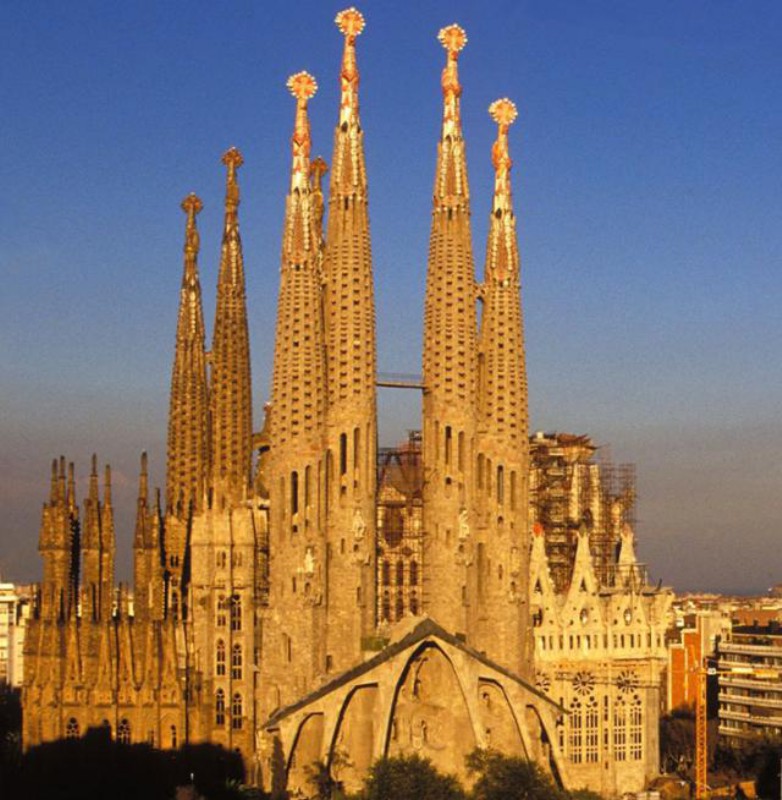
Barcelona’s Eixample is the stage for numerous modernist buildings, with Antoni Gaudí’s Sagrada Família, Casa Milà, and Casa Batlló standing out as icons. His designs perfectly combine natural elements with structural forms. In these creations, curves and colors have become legendary symbols, telling the story of Catalan identity through architecture.
The Waterfront and Contemporary Architecture
With 21st-century development, Barcelona’s waterfront has gained many modern landmarks, such as the Olympic Port and skyscrapers near Diagonal Avenue. These new structures harmonize with the older districts, allowing the city to preserve its culture while constantly refreshing its image.
Conclusion and Walking Tips
If you plan a deep Spanish architectural floor layout walk in Barcelona, it’s best to explore by district, focusing on one area per day to fully enjoy its architectural arrangement. Whether photographing, sketching, or simply experiencing the flow of space, you’ll find your own story and rhythm within the city’s layout.
