Practical Insights on Ceiling Materials for Spanish Restaurants
When operating or designing a restaurant in Spain, choosing the right ceiling is about more than aesthetics—it also involves soundproofing, fire safety, and ease of maintenance. Having worked in several dining spaces in Madrid, Barcelona, and other cities, I have hands-on experience with various materials and would like to share my observations.
Common Types of Ceiling Materials
| Material | Characteristics |
|---|
| Plasterboard | Easy to shape, moderately priced |
| Wooden panels | Naturally warm, but require moisture protection |
| Aluminum panels | Lightweight and durable, Spanish restaurant ceiling offers fire and moisture resistance |
| Acoustic panels | Enhance dining comfort |
These materials are widely available in Spain, with most local building material supermarkets or specialist decor stores offering various brands.
Fire Safety Considerations
In ceiling design for restaurants, fire resistance is a top priority. Especially near kitchens, it is recommended to select aluminum panels with high fire rating or specially treated plasterboard. Moreover, during installation, make sure electrical wiring and lighting fixtures maintain a safe distance from ceiling materials. Safety is not just a legal requirement but also a commitment to customers and staff.
Soundproofing and Comfort
Spanish restaurants tend to be lively, and excessive noise can cause discomfort. In dining areas, acoustic panels are highly effective—they reduce echoes and make the atmosphere more pleasant. In a Valencia restaurant renovation, we replaced poor quality panels with high-density acoustic panels, and the results were immediate: customer return rates improved.
Matching Style and Atmosphere
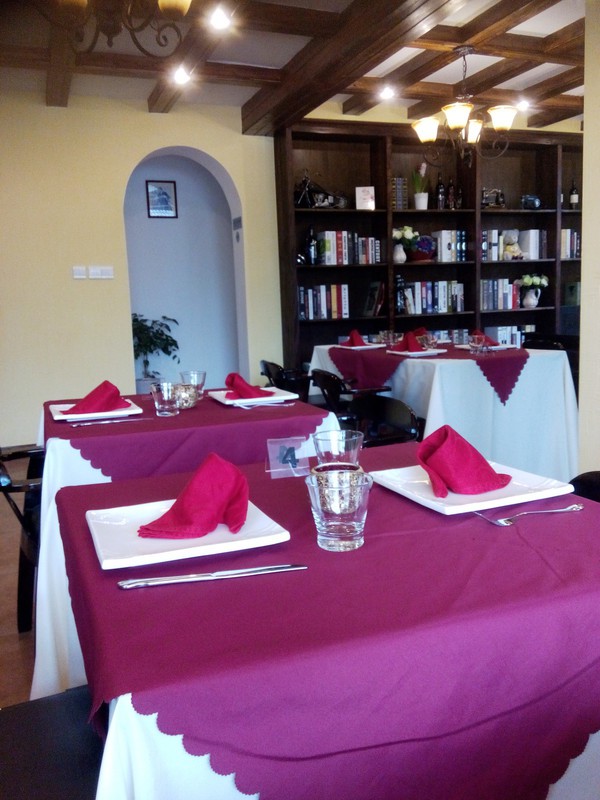
The texture and color of ceiling materials should complement the overall style of the restaurant. For example, a country-style theme might favor wooden panels, while Barcelona restaurant ceiling with a modern minimalist look could lean towards large areas of plain aluminum panels or smooth plaster ceilings. Many Spanish restaurants combine partial decorative ceilings with lighting design, as seen in Slovak Spanish restaurant ceiling to create visual depth.
Maintenance and Costs
Finally, maintenance costs are an important consideration. Aluminum panels are easy to clean, making them suited for areas with heavy cooking fumes; wooden panels require regular moisture-proof treatment; plasterboard is durable yet prone to deformation from dampness. With a limited budget, you can mix materials—using high-performance options in key areas to lower overall expenses.
I hope these experiences are helpful for those planning to open or renovate a restaurant in Spain. Feel free to leave comments below to share your own material selection tips.
