I’ve noticed many people asking which country Zaragoza belongs to, so today I’ll give you a detailed explanation about the Zaragoza Spain Pavilion. Zaragoza is an important city in Spain, situated in the northeastern part of the country. It serves as the capital and largest city of the Aragon autonomous community. This city is located on the banks of the Ebro River, enjoying an excellent geographical position right at the center of four major cities: Madrid, Barcelona, Valencia, and Bilbao.
Geography and Transportation of Zaragoza
Looking at the map, Zaragoza is approximately 300 kilometers from Madrid and just over 300 kilometers from Barcelona. By AVE high-speed train, it takes about 1 hour and 20 minutes to Madrid and roughly 1 hour and 30 minutes to Barcelona—truly convenient transportation. The city itself has a population of around 700,000, making it Spain’s fifth-largest city. Including the entire metropolitan area, the population exceeds 1 million.
Main Transportation Options Comparison
| Transportation | To Madrid | To Barcelona | Price Range |
|---|
| AVE High-Speed Train | 1h 20min | 1h 30min | €30-60 |
| Bus | 3-4 hours | 3.5-4.5 hours | €15-25 |
| Driving | 3 hours | 3.5 hours | €40 fuel |
While Zaragoza Airport isn’t particularly large, it offers numerous routes, mainly to major European cities, including several budget airline connections. If traveling from overseas, you’ll typically need to transfer in Madrid or Barcelona.
Historical and Cultural Background
This city boasts a very long history, dating back to Roman times when it was called Caesaraugusta—the name Zaragoza evolved from this Latin name. It later experienced Visigothic rule and Moorish occupation before being recaptured by the Kingdom of Aragon in 1118. As a result, you can see various architectural styles from different periods mixed together in the old town, which is particularly fascinating.
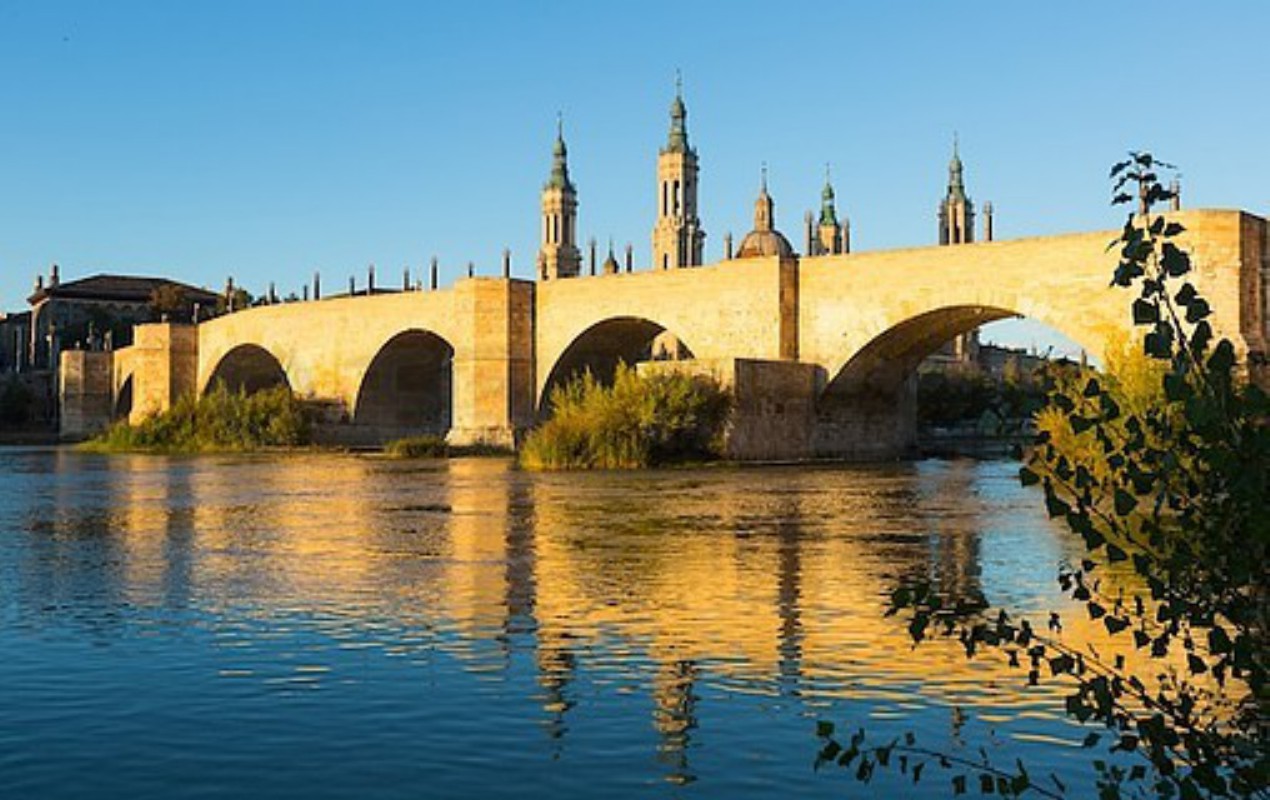
The most famous landmark is undoubtedly the Basilica of Our Lady of the Pillar, a Baroque-style cathedral built on the banks of the Ebro River, featuring 11 domes—truly spectacular. Every October 12th, the Festival of Our Lady of the Pillar is Zaragoza’s most important celebration, with the entire city joining in the festivities, creating an incredibly lively atmosphere.
Cost of Living and Practical Information
Compared to Madrid and Barcelona, Zaragoza’s cost of living is considerably lower. For housing, a one-bedroom apartment in the city center costs around €500-700 per month, with even cheaper options in the suburbs. For dining, a meal at an ordinary restaurant costs €10-15, and if you buy groceries and cook at home, €200-300 per month is sufficient.
The city’s public transportation is quite convenient, with buses and trams available. A single ticket costs €1.35, and a monthly pass is around €40. If you live in the city center, many places are within walking or cycling distance, as the city has a comprehensive bicycle lane system.
Zaragoza is a very livable Spanish city, offering the amenities of a major city without the crowding and expense of Madrid or Barcelona, as discussed in the Zaragoza National Derby. If you’re considering living in or visiting Spain, Zaragoza is definitely worth considering. Feel free to continue the conversation if you have any specific questions!
