Hey everyone! As a newcomer to Spain, I’ve been spending my days exploring the best places to eat. I’ve had my fill of tapas, paella, and Iberian ham—it’s been absolutely incredible! But the more I eat, the more curious I get: where do all these Spanish dishes we love today actually come from? So, I’m starting this thread to chat while we eat and dig into the thousand-year evolution of Spanish cuisine.
To trace the origins of Spanish food, we have to go back to the Roman era. The Romans were more than just conquerors; they introduced the key developments in Spanish cuisine the so-called ‘Mediterranean trinity’—wheat, grapes, and olives. From that point on, bread, wine, and olive oil became the unshakeable cornerstones of the Spanish table. You could say the Romans laid the very first crucial foundation for Spanish cuisine, an influence that persists to this day.
When talking about Spanish food, you can’t ignore the nearly 800-year Moorish rule. This period brought about revolutionary changes to the rich history of Spanish food on the Iberian Peninsula, especially in agriculture and diet. They introduced rice, sugarcane, citrus fruits, eggplant, almonds, and essential spices like saffron. Many of the desserts and rice dishes we enjoy today can trace their roots back to that era. It’s safe to say that without the Moors, we wouldn’t have the paella we all crave today!
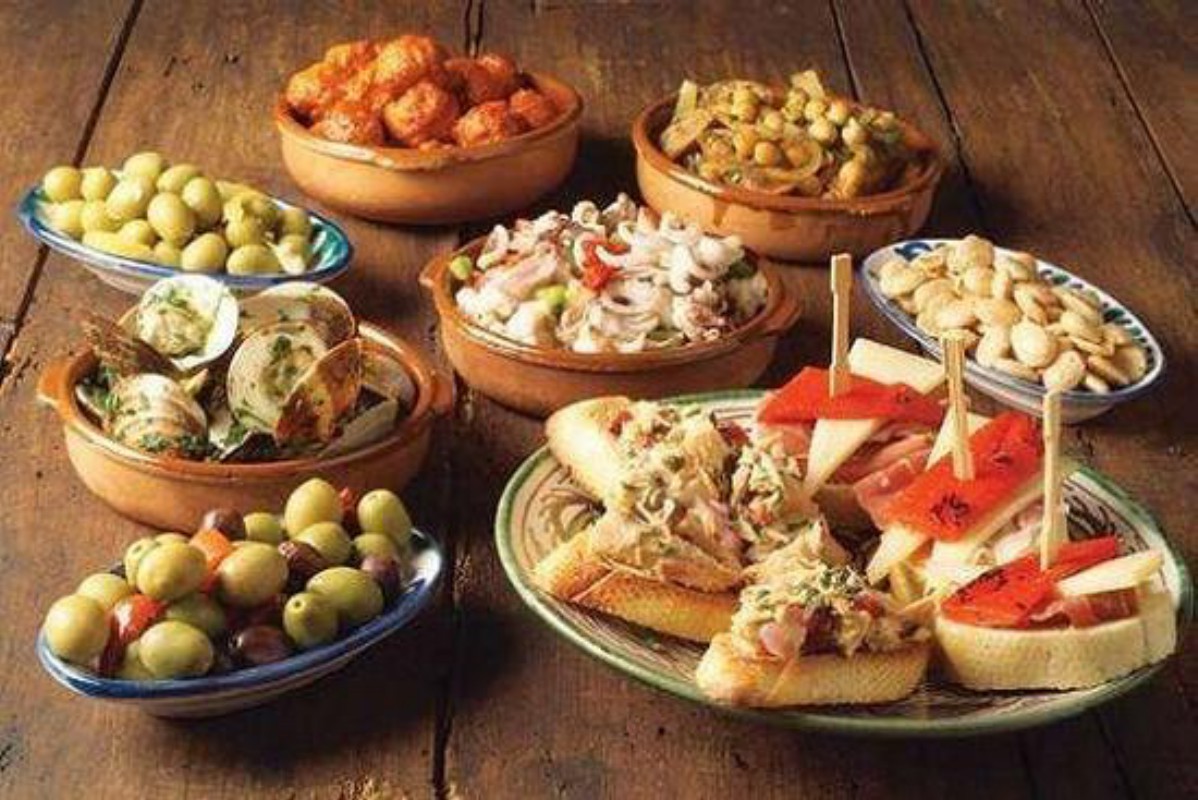
Next up, the Age of Discovery! Columbus’s arrival in the New World didn’t just change world history; it completely revolutionized the Spanish kitchen. Can you imagine that before the 15th century, Spanish cuisine had no tomatoes or potatoes? It was precisely these ‘exotic new ingredients’ brought back from the Americas that enriched Spain’s culinary repertoire, a key factor in the current state of the Spanish food industry. This little table makes it clear:
| Core Old World Ingredients | New World Ingredients that Changed the Spanish Table |
|---|
| Wheat, olives, grapes, rice | Tomatoes, potatoes, chili peppers, corn, cacao |
| Pork, lamb, various herbs | Bell peppers, squash, vanilla beans, turkey |
Entering the modern era, Spanish cuisine began its ascent to the global stage. On one hand, various regions have been working hard to preserve and promote their unique traditional flavors, like the Pintxos of the Basque Country and the stews of Catalonia. On the other hand, pioneering chefs led by the legendary Ferran Adrià sparked a ‘molecular gastronomy’ revolution. By deconstructing and reconstructing ingredients with scientific methods, they turned food into edible art, making Spain a pilgrimage destination for foodies worldwide. So, what do you all prefer? Traditional home-style cooking or the innovative molecular gastronomy? Let’s discuss in the comments!
