A Quick Guide to Spanish History: From Roman Province to Modern Kingdom
Hello everyone! For those who have just arrived in Spain or are simply curious about this country, do you ever feel that the culture here has incredible depth, as you can see in this overview of Spanish history? This is all thanks to its complex past. Today, I’m starting this thread to walk you through Spain’s thousands of years of history in simple terms. After reading this, I guarantee you’ll have a whole new level of understanding of Spain!
Imperial Foundations and Shifting Tides
Spain was first known as Hispania, an important province of the Roman Empire, and today you can still see magnificent Roman ruins in places like Segovia and Mérida. After the fall of Rome, the Germanic Visigoths arrived, establishing their capital in Toledo. Although their rule was lengthy, their legacy wasn’t as profound, as detailed in this summary of Spanish history, but it set the stage for the chapters to come.
The Moorish Footprint and the Long Reconquest
In the 8th century, the Moors from North Africa crossed the strait, beginning a rule over the Iberian Peninsula that lasted nearly 800 years, which they called Al-Andalus. During this period, Islamic civilization flourished in Spain, especially in the southern cities of Granada, Córdoba, and Seville, leaving behind countless examples of exquisite architecture. The famous Alhambra Palace is the pinnacle of this era’s art! Meanwhile, the Christian kingdoms in the north began the long ‘Reconquista’ (Reconquest), a centuries-long struggle that profoundly shaped the Spanish national character.
The Golden Age and the Empire on Which the Sun Never Sets
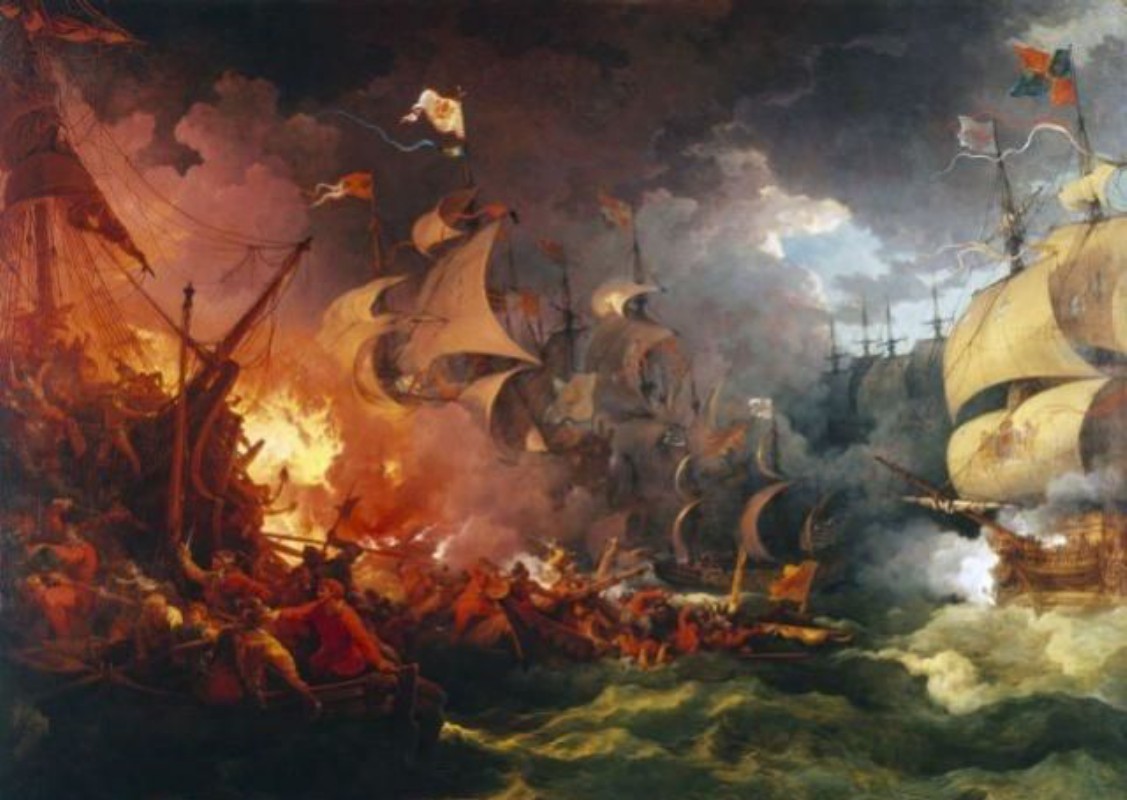
1492 was a pivotal year! In that year, the Catholic Monarchs, Isabella I and Ferdinand II, conquered Granada, completing the unification of Spain. They also sponsored Columbus’s voyage, which unexpectedly ushered in Spain’s ‘Golden Age’. Over the next century, Spain, fueled by wealth from the Americas, established the first ‘empire on which the sun never sets’, reaching its zenith in military power, culture, and the arts.
From Decline to Modern Democracy
All good things must come to an end, and empires, too, eventually decline. After the War of the Spanish Succession, the Napoleonic invasion, and a wave of colonial independence movements, Spain’s power greatly diminished. The 20th century brought a brutal civil war followed by nearly 40 years of dictatorship under Franco. It wasn’t until Franco’s death in 1975 that King Juan Carlos I initiated a transition to democracy, leading Spain to become the constitutional monarchy we know today, joining the European Union and reintegrating into the European community.
Here’s a quick reference table of dynasties/periods to help you remember:
| Period/Dynasty | Approximate Dates | Key Features |
|---|
| Roman Rule | 218 BC - 5th Century AD | Latinization, infrastructure development |
| Visigothic Kingdom | 5th Century - 711 AD | Christianization, early feudalism |
| Al-Andalus Period | 711 - 1492 | Islamic civilization, flourishing science and art |
| Habsburg Dynasty | 1516 - 1700 | Golden Age, ‘The Empire on which the sun never sets’ |
| Bourbon Dynasty to Present | 1700 - Present | Enlightenment reforms, transition to democracy |
