The History of Spain: A Millennial Epic of Fusion, Conflict, and Exploration
For those of you new to Spain, are you often amazed by the diverse architectural styles and cultures here? From the Arab-influenced charm of Andalusia in the south to the Roman ruins of Segovia in the north, behind it all lies a thousand-year-old drama full of twists and turns. Today, as a history enthusiast, I’m going to talk with you about how Spain gradually evolved into the country we see today.
Spain’s Ancient Origins: From Roman Province to Visigothic Kingdom
It all traces back to the Roman era. At that time, the Iberian Peninsula was an important province of the Roman Empire, known as Hispania. The Romans left behind magnificent aqueducts, theaters, and road networks. More importantly, they brought the Latin language, the ancestor of modern Spanish, a fundamental part of Spain’s historical evolution. After the fall of the Roman Empire, the Germanic Visigoths took the stage. Although they failed to establish a long-lasting and stable rule, they laid the groundwork for the future unification of Spain through religion and law codes.
A Historical Turning Point: The Islamic Light of Al-Andalus
In 711 AD, Muslims from North Africa crossed the Strait of Gibraltar, beginning a rule over the Iberian Peninsula that would last for nearly eight centuries. This land, known as ‘Al-Andalus’, became the most brilliant center of civilization in Europe at the time, a key phase in the timeline of Spain’s history. Especially in Córdoba, science, philosophy, medicine, and art reached their zenith. Thought Spain was always a Catholic country? Completely wrong
! Islamic civilization left an incredibly deep and still visible mark here, with the Mosque-Cathedral of Córdoba being the most classic example.
The Long Reshaping: The Reconquista and National Unification
The Christian kingdoms in the north, however, did not give up. A long-lasting Reconquista (Reconquest)
began. This was not a single war, but a prolonged tug-of-war that lasted over seven hundred years, with intermittent fighting and truces. Ultimately, the marriage of Queen Isabella I of Castile and King Ferdinand II of Aragon laid the foundation for Spanish unification. In 1492, they conquered Granada, the last stronghold of the Moors, completing the political unification of Spain. The table below can help us quickly understand this complex period of history:
| Period | Rulers/Major Powers | Cultural Characteristics |
|---|
| 218 BC - 5th Century AD | Roman Empire | Latin language, Roman law, Christianity, infrastructure development |
| 5th Century - 711 AD | Visigothic Kingdom | Feudal system, fusion with Roman culture |
| 711 AD - 1492 AD | Muslim Rule (Al-Andalus) | Islamic culture, flourishing science and art, religious coexistence |
| 11th Century - 1492 AD | Northern Christian Kingdoms | Reconquista, strengthening of Catholic culture |
Imperial Glory and the Path to Modernity
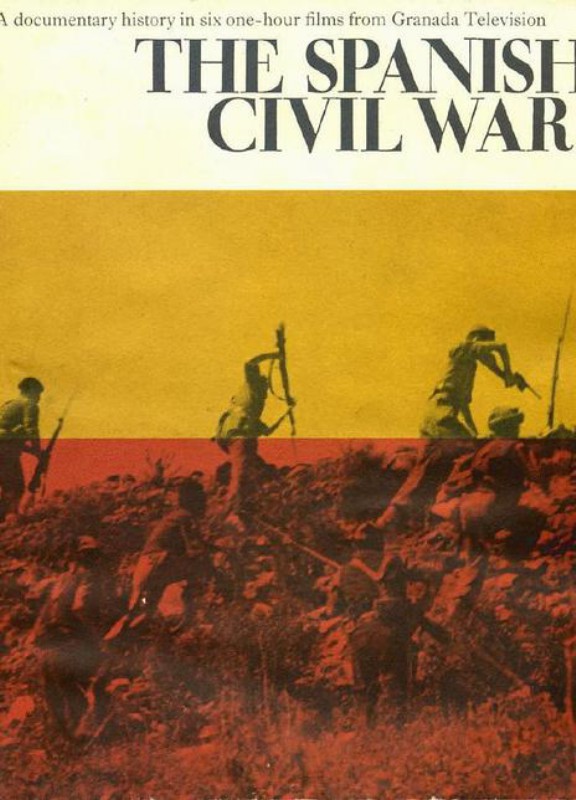
The year 1492 was also another turning point in Spain’s destiny—Columbus discovered the New World. The immense wealth from the Americas propelled Spain to the pinnacle of its power as ‘the empire on which the sun never sets,’ ushering in the glorious ‘Golden Age’. However, constant wars, royal extravagance, and internal conflicts caused this vast empire to gradually decline. After experiencing the War of the Spanish Succession, the Napoleonic invasion, a civil war, and a dictatorship, Spain finally made a smooth transition in the late 1970s to become the constitutional monarchy we know today.
The history of Spain is a continuous story of fusion and conflict. Romans, Visigoths, Moors, Jews, and Christians all left their mark on this land. By understanding these aspects of the complete evolution of Spanish history, perhaps the next time we see those magnificent cathedrals and exquisite palaces, we’ll be able to read more of the stories behind them. What other periods of Spanish history are you interested in? Feel free to leave a comment and discuss below!
