For all the new expats and students who’ve just moved to Spain: ever find yourself amazed by the city squares and ancient buildings, but feel a bit clueless about the history behind them? This post gives you a quick rundown in plain language of what Spain has been through over the millennia. We promise you’ll see the country in a whole new light after reading!
A Quick Introduction to Spanish History
First things first, long before it was ‘Spain,’ the Iberian Peninsula was a bustling place. Its early inhabitants were the Celts and Iberians. Then, the mighty Roman Empire arrived and stayed for several hundred years. The Roman influence was profound: you can still see their magnificent aqueducts and theaters across the country. More importantly, the Latin spoken by the Romans evolved into modern Spanish. After the fall of Rome, the Germanic Visigoths took over. Their rule, however, was short-lived, as the next major power was about to make its entrance. You can explore this early period with A Comprehensive Collection of Spanish History.
The Profound Influence of the Islamic Period
In 711 AD, the Moors from North Africa crossed the Strait of Gibraltar, beginning a nearly 800-year rule over the Iberian Peninsula. This period, known as ‘Al-Andalus,’ was an exceptionally brilliant chapter in Spanish history. They established prosperous kingdoms in cities like Córdoba and Granada, bringing with them advanced knowledge of mathematics, medicine, and astronomy. This is all covered in this Simplified Version of Spanish History. The stunning Islamic-style architecture we see today when traveling through Andalucía is a direct legacy of that time.
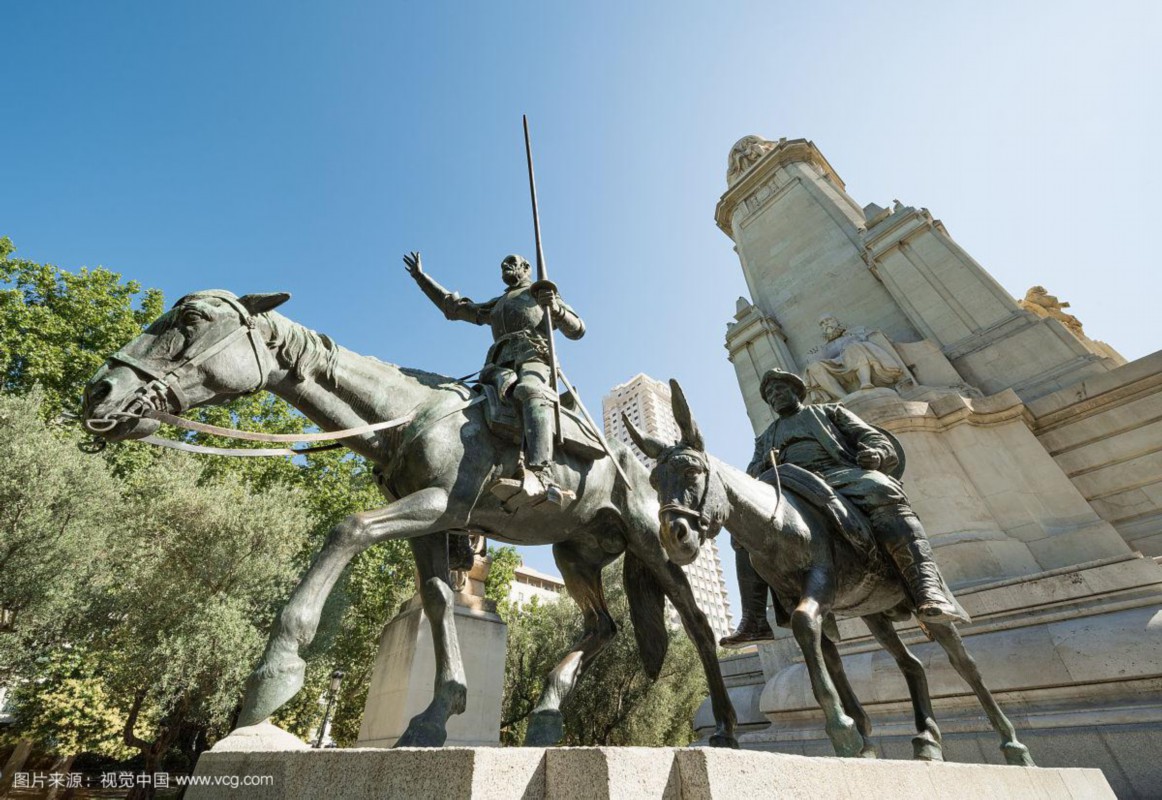
The Reconquista and the Golden Age
Meanwhile, the small Christian kingdoms in the north weren’t sitting idle; they were engaged in the ‘Reconquista’ (Reconquest). This centuries-long war finally concluded in 1492 when the Catholic Monarchs conquered Granada, the last Moorish stronghold. In the very same year, they sponsored Christopher Columbus, who ‘accidentally’ discovered the New World, launching Spain’s era as ‘the empire on which the sun never sets’. Vast amounts of gold and silver were shipped back from the Americas, bringing Spain to the height of its power. Culture and arts flourished as never before, marking the famous ‘Golden Age.’
| Timeline | Major Event |
|---|
| 711 AD | The Moors cross the Strait of Gibraltar, beginning the Al-Andalus era |
| 1492 | End of the Reconquista & Columbus discovers the New World |
| 16th-17th Centuries | The Spanish Golden Age |
| 1978 | New constitution is enacted; Spain enters its modern democratic period |
In the following centuries, Spain went through a series of turbulent events, including the War of the Spanish Succession, the decline of its empire, the Napoleonic invasion, the independence of its colonies, a devastating Civil War, and the Franco dictatorship. It wasn’t until Franco’s death in 1975 that Spain transitioned peacefully into the constitutional monarchy and democracy we know today. It joined the European Union in 1986, starting a completely new chapter of development. After learning all this from A Brief Introduction to Spanish History, won’t your next visit to a museum or historic district feel more meaningful? What part of history are you most interested in? Feel free to discuss it in the comments below!
