When I first arrived in Spain, my knowledge of ham was almost zero; I only knew it was called Jamón. Later, thanks to advice from gourmet friends, I gradually understood that the black label hanging on the ham, showing a small pig eating acorns, was the true “king of hams” — 100% Iberian acorn-fed ham. Its complex aroma and melt-in-the-mouth texture come from a highly meticulous and lengthy traditional production process. Today, let’s talk about how this earthly delicacy is truly “crafted.”
The Journey of the Black Label Ham
Step One: The “Noble” Bloodline and Free-range Life of the Pig
Everything starts with a happy pig. Black Label Ham must use 100% purebred Iberian black-hoof pigs. More importantly, in their final months, these pigs must roam freely in oak forests, feeding mainly on acorns. It is precisely these Spanish Black Label Ham slices acorns that give the ham its unique nutty aroma and healthy oils rich in unsaturated fatty acids. In other words, without happy pigs, there’s no top-quality ham.
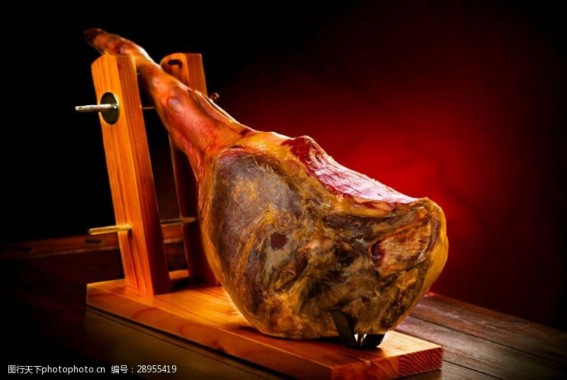
Step Two: The Baptism of Sea Salt — Curing and Shaping
After the pig leg is meticulously trimmed, it enters the first critical stage: curing. Artisans completely cover the leg with sea salt, using the salt’s permeation to draw out moisture while inhibiting bacterial growth. The curing time is crucial, generally following the “one day per kilogram” rule — one day too many makes it too salty, one day too few risks spoilage.
| Ham Weight | Recommended Curing Days |
|---|
| 7 - 8 kg | About 7 - 8 days |
| 8 - 9 kg | About 8 - 9 days |
| 9 - 10 kg | About 9 - 10 days |
After curing, the surface salt is washed off, then the ham undergoes a secondary curing period lasting 40 to 60 days to let the salt penetrate evenly inside, beginning to fix the shape.
Step Three: The Magic of Time — Air Drying and Maturation
This is the soul step that determines the ham’s flavor. The ham is transferred to a natural air-curing room, where it stays for 6 to 9 months under the watchful eyes of its makers. Here, Spanish Black Label Ham is slowly dehydrated by natural breezes as artisans control temperature and humidity by adjusting window openings. The fat begins a fascinating transformation. Afterwards, the ham moves into deep underground cellars for aging that lasts several years, at least 24 months, with top-grade Black Label hams aging over 48 months. Time bestows unparalleled complex aromas and layered flavors.
When an experienced ham master inserts a slender ox bone needle into different parts of the ham and uses the Spanish Ham Black Label 5J scent to judge whether it has reached perfection, only then is a top-tier Black Label ham truly complete. So, the idea that all Spanish ham is basically the same is completely mistaken! The entire process is full of craft and respect for time. I’m curious, which region’s Black Label ham do you love most in Spain? Feel free to share your favorites with me!
