When I first arrived in Spain, what fascinated me most were the massive hams hanging from the ceilings of bars and markets, filling the air with a unique savory aroma. I always wondered, how exactly is this made? Today, let’s have an in-depth talk about it! It’s definitely more than just “Spanish ham production process”, a simple chunk of cured pork.
A Good Leg Starts with the “Pig”
Spanish ham mainly comes in two types, distinguished by the pig breed. One is the famous Iberian ham, made from Spain’s unique black-hoofed pigs. These pigs are usually free-range in oak forests, feeding on acorns, which gives the meat its distinctive nutty aroma. The other is Serrano ham, made from ordinary white pigs. It has a larger production volume and is more affordable, making it a staple on Spanish tables.
The Magical Making Process
From a raw pig leg to a delicious delicacy on your table, the whole process is full of patience and wisdom, basically divided into four main steps:
- Curing: The pig leg is fully covered with sea salt to remove moisture. The time depends on the leg’s weight, roughly one day per kilogram.
- Washing and resting: The surface salt is washed off, then the ham is placed in a low temperature and high humidity environment to allow the salt to penetrate evenly inside the muscles.
- Drying: The ham is hung in a ventilated indoor area where natural temperature changes with the seasons slowly dehydrate it, and fat gradually permeates the meat.
- Aging: This is the most crucial step in the Spanish ham making method! The ham is moved to cellars where it undergoes long-term maturation for months or even years under constant temperature and humidity. During this phase, complex biochemical reactions occur inside, creating unparalleled flavor and aroma.
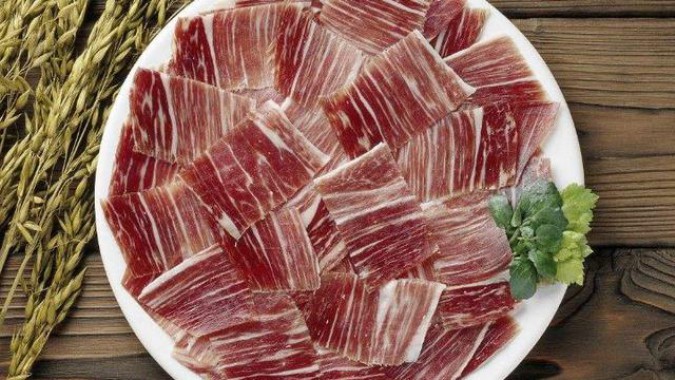
Iberian vs Serrano: A Table to Understand
To offer a clearer comparison, here’s a simple table:
| Feature | Iberian Ham | Serrano Ham |
|---|
| Pig Breed | Native black-hoofed Spanish pig | Common white pig |
| Farming | Acorn-fed, natural pasture | Mainly grain-fed |
| Aging Time | 24 - 48 months or longer | Typically 7 - 16 months |
| Flavor | Complex, nutty, oily | Salty and straightforward, drier texture |
| Price | Expensive | Affordable |
Therefore, as described in Spanish ham production, every premium Spanish ham, especially Iberian ham, is a masterpiece of time and nature, embodying centuries of Spanish tradition and craftsmanship. It’s more than just food — it’s culture. Which one do you prefer? Join the discussion! Anyway, my mouth is already watering.
