When I first arrived in Spain, I always thought Spanish ham was just those pre-sliced packs from the supermarket. It wasn’t until last weekend, when a friend took me to his village near Salamanca to witness a traditional Matanza firsthand, that I truly understood how much tradition, family, and local culture are embedded in a top-quality Iberian ham.
From November through February, when the weather turns cold and dry, the rural pig slaughtering season in Spain is at its liveliest. This is far from a bloody scene; instead, it feels like a big family celebration. The whole family, and even neighbors from the entire village, gather together, sharing tasks. Men handle the heavy labor while the women busy themselves with processing the meat, stuffing sausages, and curing the loins. The atmosphere is filled not with tension but with the joy of harvest and the aroma of food, of course, with just a hint of alcohol in the air.
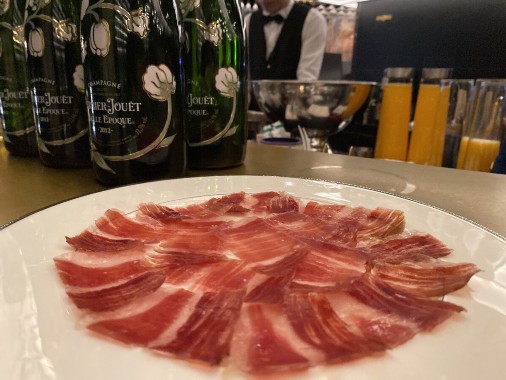
My friend’s family raises the most authentic Iberian black pigs, which roam freely year-round in oak forests and grow up eating acorns. This is the foundation of the distinctive flavor in Spanish ham production methods. After slaughter, the two most precious hind legs are carefully cut off in one piece to begin their long “ham journey.” Every step follows strict traditions.
The first step is shaping and cooling at low temperatures, followed by the critical curing stage. Workers completely cover each pig leg with coarse sea salt to dehydrate and preserve the meat. Temperature and timing during this process are meticulously controlled. I specifically asked my friend’s father, who summarized the process in a simple table:
| Stage | Main Task | Approximate Duration |
|---|
| Curing | Covering the pig leg with sea salt, low-temperature storage | About 1 day per kilogram |
| Washing | Washing off surface salt with warm water | Several hours |
| Balancing | Placing in a low-temperature, high-humidity environment to let salt penetrate evenly | 40-60 days |
After completing these steps of Spanish ham production, the ham’s “training” has only just begun. They are moved to natural storage cellars for drying and aging. Over the following years, relying solely on the local unique climate, the ham ferments; fat slowly seeps into the muscle fibers, creating beautiful marbling and an incomparable aroma. Seeing rows of hams hanging from the beams truly lets you feel the magic of time. I wonder if any of you have had similar experiences or if you have a favorite ham-producing region?
